Today, we can wash our clothes easily with a washing machine. Modern detergents and appliances make laundry a simple part of everyday life.
However, laundry was very different during the Meiji era (1868–1912). Kimono and Western-style clothes were washed in completely different ways.
These changes were more than just new laundry methods. They reflected how everyday life in Japan changed as the country modernized.
Kimono Were Cleaned with Araihari
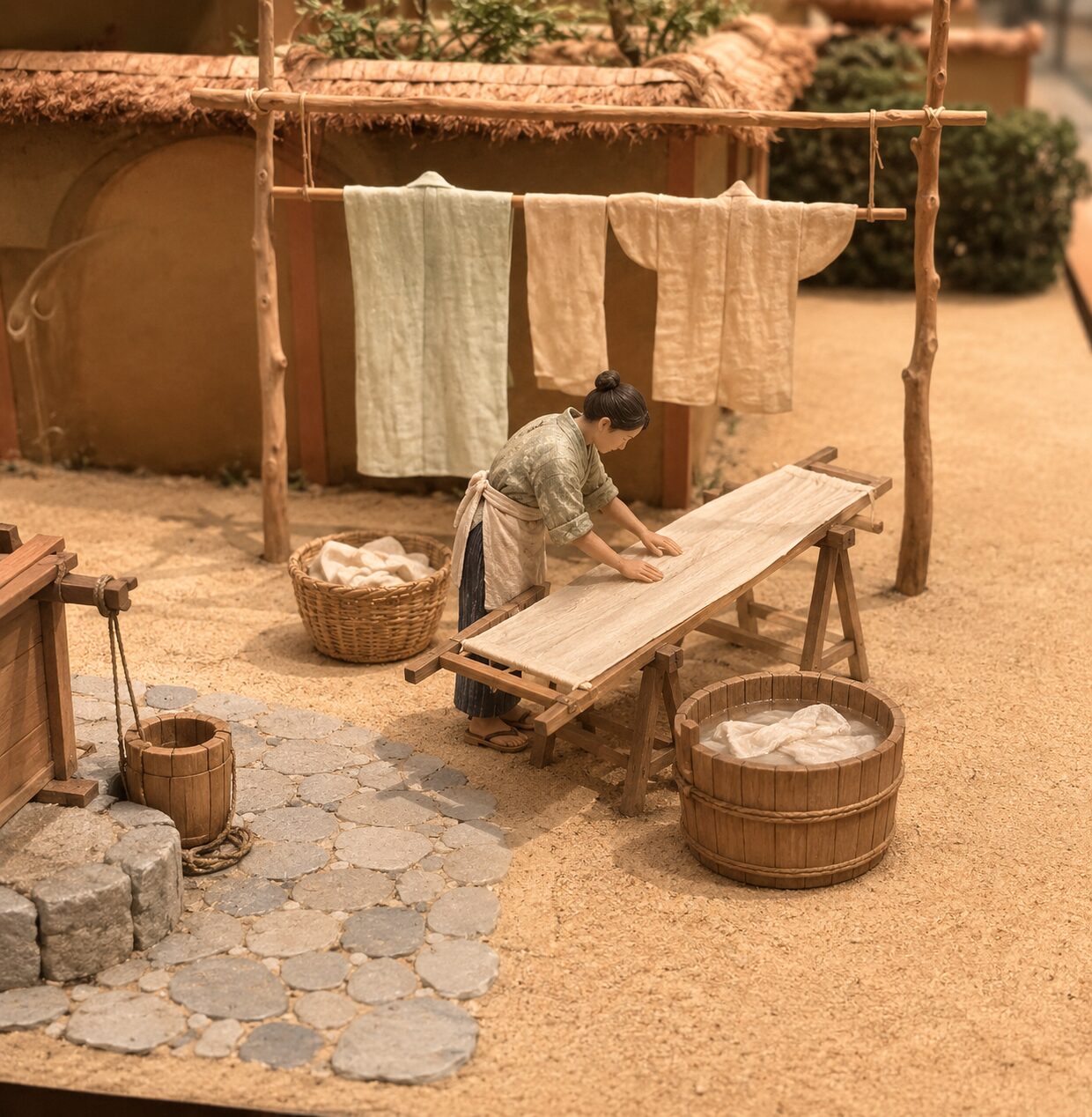
During the Meiji era, most people wore kimono in their daily lives. Unlike modern clothes, kimono could not simply be washed as they were. Instead, they were cleaned using a traditional method called araihari.
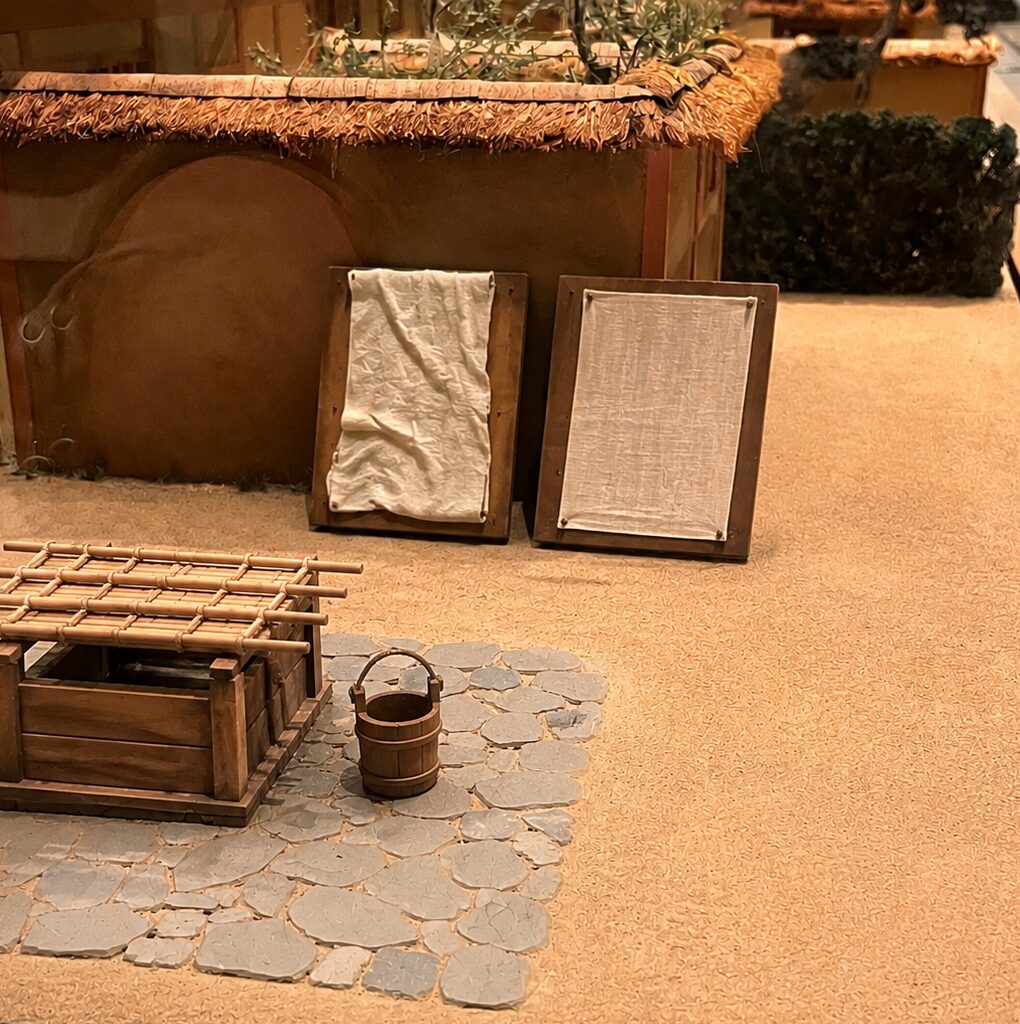
In araihari, a kimono was carefully taken apart into separate pieces of fabric. Each piece was washed, sometimes starched, and stretched on wooden boards to dry. After drying, the fabric was sewn back together to make the kimono again.
This process required skill and took a great deal of time. Many people asked professional craftsmen to do the work.
Because kimono were expensive, people tried to keep them for many years. Araihari was not part of everyday laundry. It was usually done during seasonal clothing changes or when a kimono needed special care.
Western Clothes Brought New Ways of Washing
As Japan modernized, Western-style clothing gradually became more common. Soldiers, police officers, government officials, and students began wearing uniforms, and Western clothing slowly spread among the public.
Unlike kimono, Western clothes could not be taken apart for washing. Instead, they were washed by hand while still sewn together.
People used soap, washboards, and wooden tubs to scrub away dirt before rinsing and hanging the clothes to dry. Every step was done by hand, making laundry hard physical work.
The spread of Western laundry methods went hand in hand with the growing popularity of Western clothing in Japan.
Two Laundry Traditions Existed Side by Side
The Meiji era was a time when both Japanese and Western clothing were worn.
Kimono were cared for with araihari, while Western clothes were washed by hand without taking them apart. Many families used different washing methods depending on the type of clothing.
Today, we usually wash all of our clothes in similar ways. In the Meiji era, however, different kinds of clothing required completely different care.
This shows how traditional Japanese customs and new Western ideas existed side by side during this period.
Laundry Was Hard Work
There were no electric washing machines in the Meiji era. People carried water from wells or water sources, washed clothes by hand, rinsed them, wrung them out, and hung them up to dry.
In many households, laundry was mainly done by housewives or other women responsible for household work. In wealthier homes, servants often took care of the laundry, and some families used professional laundry services.
Although it was rarely noticed, laundry was an essential part of daily life. Keeping clothes clean required much more time and effort than it does today.
Conclusion
The history of laundry tells us a great deal about changes in clothing and everyday life.
The Meiji era was a time of transition, when the traditional practice of araihari existed alongside Western-style hand washing. Different methods were used for different kinds of clothing as people gradually adapted to new ways of living.
Even an ordinary household chore like laundry reflects Japan’s journey toward modernization. Looking at history through everyday life helps us better understand how people lived during the Meiji era.
Refarence
Toyama-ken Cleaning Seikatsu Eisei Dōgyō Kumiai (Toyama Prefecture Cleaning and Laundry Services Association)