Goldfish Appreciation and Japanese Aesthetics
Today, goldfish are often enjoyed in the same way as tropical fish, viewed from the side through a glass aquarium. However, in the past, people in Japan also enjoyed looking down into the water and appreciating goldfish from above.
As goldfish became popular from the Edo period onward, Japanese people developed a preference for goldfish that were beautiful when viewed from above.
In this article, we will explore the history of goldfish culture from the Edo period to the Meiji and Taisho eras, and introduce Japan’s unique way of appreciating these fish.
The Rise of Goldfish Culture in the Edo Period
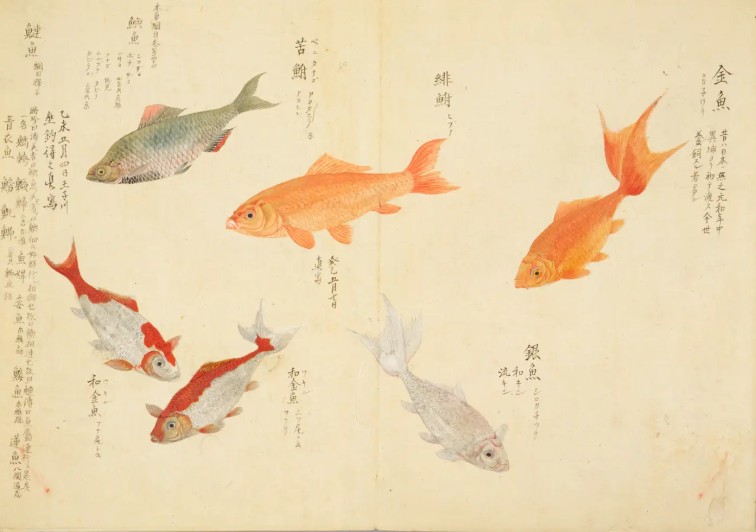
Goldfish were originally introduced to Japan from China as ornamental fish.
During the Edo period, goldfish became popular not only among samurai but also among townspeople, becoming a familiar part of everyday life.
In summer, goldfish sellers walked through the streets, and goldfish became a symbol of the season.
Placing a goldfish bowl in a garden or on a veranda and watching the fish swim was one way people enjoyed a sense of coolness during the hot summer months.
The Culture of Enjoying Nature Through Plants and Goldfish
The Meiji and Taisho eras were also a time when gardening became popular among many people.
Growing and appreciating plants such as morning glories, chrysanthemums, and bonsai became a common pastime, and gardens and verandas became places where people could enjoy the changing seasons.
Goldfish were another part of this culture of appreciation.
Growing flowers, feeling the changes of the seasons, and watching goldfish swim.
Plants and goldfish both developed within a Japanese tradition of bringing nature closer to everyday life and enjoying it through careful observation.
The Beauty of Viewing Goldfish from Above
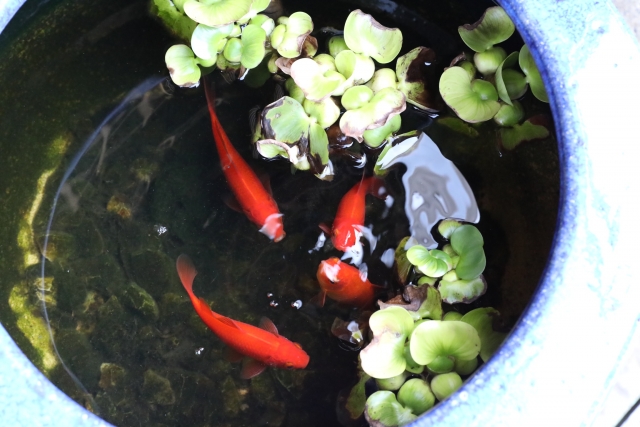
In traditional goldfish appreciation, viewing fish from above, known as uwami, viewing goldfish from above was important.
When goldfish swim in a water lily bowl or goldfish bowl, looking down from above allows people to enjoy not only the fish themselves but also the ripples on the water and the reflection of light.
For this reason, goldfish that looked beautiful from above were highly valued in Japan, and this aesthetic influenced selective breeding.
The patterns on their backs, the roundness of their bodies, and the balance of their swimming movements were all appreciated.
The beauty valued in the past was slightly different from the beauty we look for today when viewing goldfish from the side through an aquarium.
The Spread of Side Viewing During the Meiji and Taisho Eras
The practice of keeping goldfish in glass containers did not suddenly appear during the Meiji and Taisho eras.
Glass goldfish bowls already existed during the Edo period. However, as glass products became more widely available with modernization, enjoying goldfish through transparent containers and viewing them from the side became more common.
It was a new way of appreciating the graceful movement of goldfish through glass.
However, this does not mean that the tradition of viewing goldfish from above immediately disappeared.
Many people continued to enjoy goldfish in water lily bowls and traditional goldfish bowls. In daily life during the Meiji and Taisho eras, the two styles of appreciation—viewing from above and viewing from the side—existed together.
When new tools and technologies appeared, older traditions did not always disappear immediately. Instead, they overlapped and changed gradually over time.
Goldfish as a Symbol of Summer
Goldfish were more than simply ornamental fish.
Goldfish scooping at festivals, goldfish bowls placed in gardens, and the peaceful moments spent watching them on a veranda while feeling the summer breeze.
Goldfish became a part of everyday life and a way to enjoy the changing seasons.
Conclusion
Today, we are familiar with viewing goldfish from the side through glass aquariums.
However, for a long time in Japan, people enjoyed the beauty of goldfish from above, looking into the water and appreciating their graceful forms.
During the Meiji and Taisho eras, new ways of enjoying goldfish, including glass aquariums, became popular. Yet the traditional culture of viewing goldfish from above did not disappear immediately.
Goldfish continue to carry the Japanese sense of beauty that embraces both new ideas and a long-standing appreciation for nature and the changing seasons.
Reference
Yoshida, Tomoko. The Story of Goldfish: From an Edo-Established Goldfish Wholesale Shop. Yosensha, 2013.