“Ah, yokutte yo.”
When people hear this phrase today, many may imagine an elegant “ojou-sama” (young lady) character from Japanese manga or anime.
In Japanese pop culture, “yokutte yo” is often used as a refined and slightly old-fashioned way of speaking. Depending on the situation, it may be translated into English as “Very well” or “How lovely,” carrying a sense of elegance beyond the simple meaning of “that’s fine.”
However, the meaning of “yokutte yo” was very different in the Meiji era.
Rather than being an “ojou-sama” expression, it was a new style of speech that became popular among female students. Older generations sometimes criticized it as a sign of changing manners.
In this article, we will explore the background of “yokutte yo” and the culture of Meiji-era schoolgirls.
“Yokutte Yo” Appeared in a Newspaper in 1891
In 1891 (Meiji 24), an article in The Yomiuri Shimbun titled “The Faults of Female Students (Part 3)” included the following passage:
“Even old-fashioned grandmothers would frown simply upon hearing expressions such as ‘sō nē’ or ‘ara yokutte yo.’”
This description shows that the phrase “ara yokutte yo” was already associated with female students and was considered a noticeable new style of speech.
Although “yokutte yo” sounds elegant today, in the Meiji era it was closer to a fashionable expression among young people.
Why Did “Yokutte Yo” Become Popular?
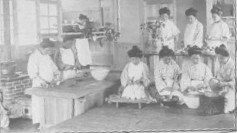
During the Meiji era, girls attending newly established schools became symbols of a changing Japan.
Yasuko Nagasaki, in her study The Change of Social Consciousness with Female Students’ Language, explains that from the Meiji period onward, female students’ clothing, behavior, and language were frequently discussed in newspapers and were often criticized as examples of new social trends.
At the time, female students enjoyed novels featuring the “teyo-dawa” style of speech, a feminine way of speaking that appeared in literary works.
For example, Uchida Roan’s How to Become a Literary Person (1894) contains descriptions suggesting that female students eagerly read such novels.
The expressions found in literature gradually entered everyday conversations, and phrases such as “yokutte yo” spread among young women.
In modern terms, it was similar to how phrases from popular dramas, movies, or social media can become trendy among younger generations.
Why Did Adults Disapprove of It?
Why did some adults dislike “yokutte yo”?
At the time, the “teyo-dawa” style of speech was sometimes associated with the language used by women in the entertainment districts.
Because of this association, some people criticized female students for using these expressions, considering them inappropriate or improper.
In other words, the image of “yokutte yo” in the Meiji era was quite different from the elegant “ojou-sama” speech often seen in modern manga and anime.
The Image of Words Changes Over Time
Today, “yokutte yo” is often recognized as a refined way of speaking, especially in fictional characters such as elegant young ladies.
However, in the Meiji era, it was a trendy expression among female students and was sometimes criticized by older generations.
The same words can have completely different meanings depending on the era.
By tracing the history of language, we can discover not only changes in speech but also the values and daily lives of people in the past.
References
- Yasuko Nagasaki, “The Change of Social Consciousness with Female Students’ Language,” Journal of Kawamura Gakuen Woman’s University, Vol. 22, No. 2, 2011, pp. 239–253.
- The Yomiuri Shimbun, “The Faults of Female Students (Part 3),” 1891.
- Uchida Roan, How to Become a Literary Person, 1894.