One of my most vivid childhood memories is spending summer nights at my relatives’ house in the countryside.
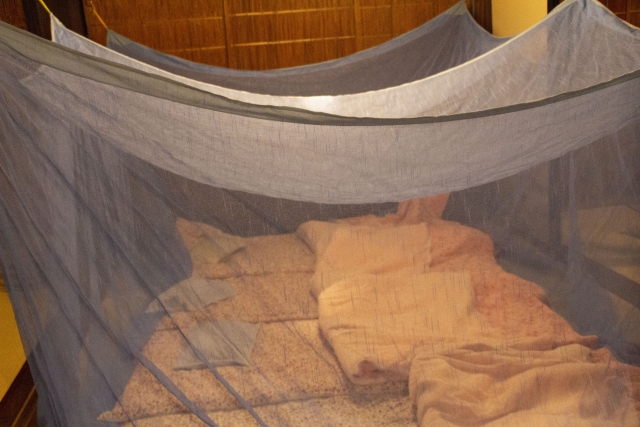
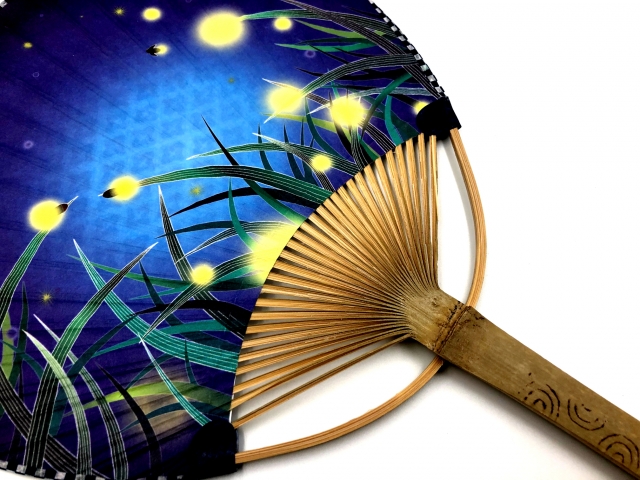
As evening fell, the adults hung a large mosquito net over the room. After dinner, they gently released the fireflies we had caught into the net. Tiny lights drifted slowly through the darkness, creating a magical scene.
Outside, insects sang in the fields, the wind rustled through the trees, and now and then I heard the calls of animals I had never heard before. The mountains and rice fields that had seemed so inviting during the day became mysterious after sunset. As a child, I found the darkness just a little frightening.
But inside the mosquito net, my family was there.
My parents, my siblings, and my relatives lay nearby, ready for sleep. Although only a thin piece of netting separated us from the outside world, it felt like the safest place imaginable.
In old Japan, a mosquito net was much more than protection from insects. It was a place where families gathered together and quietly shared the final moments of the day.
A Traditional Japanese Way to Stay Comfortable in Summer
For centuries, people in Japan used mosquito nets to protect themselves from mosquitoes during the hot, humid summer months.
Made from finely woven hemp or cotton, mosquito nets allowed cool air to circulate while keeping insects away. Long before air conditioning, they were an essential part of everyday life during summer.
By the Edo period, mosquito nets had become common even among ordinary people, and they continued to be widely used throughout the Meiji and Taisho eras. Seeing a large mosquito net hanging in a room was one of the familiar sights of a Japanese summer.
A Small Summer Room for the Whole Family
Today, many family members sleep in separate bedrooms.
In the past, however, it was common for an entire family to sleep together beneath one large mosquito net.
Young children slept beside their parents, and before everyone drifted off to sleep, families often chatted about the day’s events or simply enjoyed each other’s company.
The mosquito net was more than just bedding—it created a special room that existed only during the summer, bringing the family together night after night.
The chirping of insects, distant bird calls, the cries of unseen animals, and the sound of bamboo and trees moving in the wind filled the darkness. To a child, these unfamiliar sounds sometimes made the night seem a little frightening.
Yet everything changed once I stepped inside the mosquito net.
Feeling the cool breeze through the net and listening to the gentle breathing of my family, the outside world seemed to drift farther away.
The mosquito net did more than keep mosquitoes out—it gave children a feeling of safety, wrapped in the warmth of their family.
Sometimes, a few fireflies would quietly light up that small space.
Their soft glow transformed the darkness, turning what had once felt frightening into a memory filled with wonder.
A Summer Memory That Lives On
Today, air conditioning and modern homes have made mosquito nets increasingly rare.
Even so, the sense of security felt beneath a mosquito net and the memory of sleeping close to one’s family remain cherished by many Japanese people.
I do not remember the fireflies simply because they were beautiful.
I remember them because I watched their gentle light together with my family beneath the same mosquito net.
A mosquito net was never just a way to keep mosquitoes away.
It was a small world that gently embraced the warmth of family and the quiet beauty of a Japanese summer.

Comment