Children Playing in the River and Catching Fish
When people think of summer in Gujo Hachiman, many may think of ayu, or sweetfish.
Even today, the rivers flowing through the town are popular places for ayu fishing.
But for children in the past, the river was not a place just for adults who came to fish for ayu.
When summer vacation began, children went to the river too.
Ayu Were Too Difficult for Children to Catch
In Gujo, ayu are a special fish.
Ayu fishing has a unique technique called tomozuri, or “friend fishing.” Anglers use a live ayu, called a tomo-ayu, to attract and catch other ayu in the river.
Of course, catching an ayu was not something a child could easily do just for fun.
Instead, children caught all kinds of other fish while playing in the river.
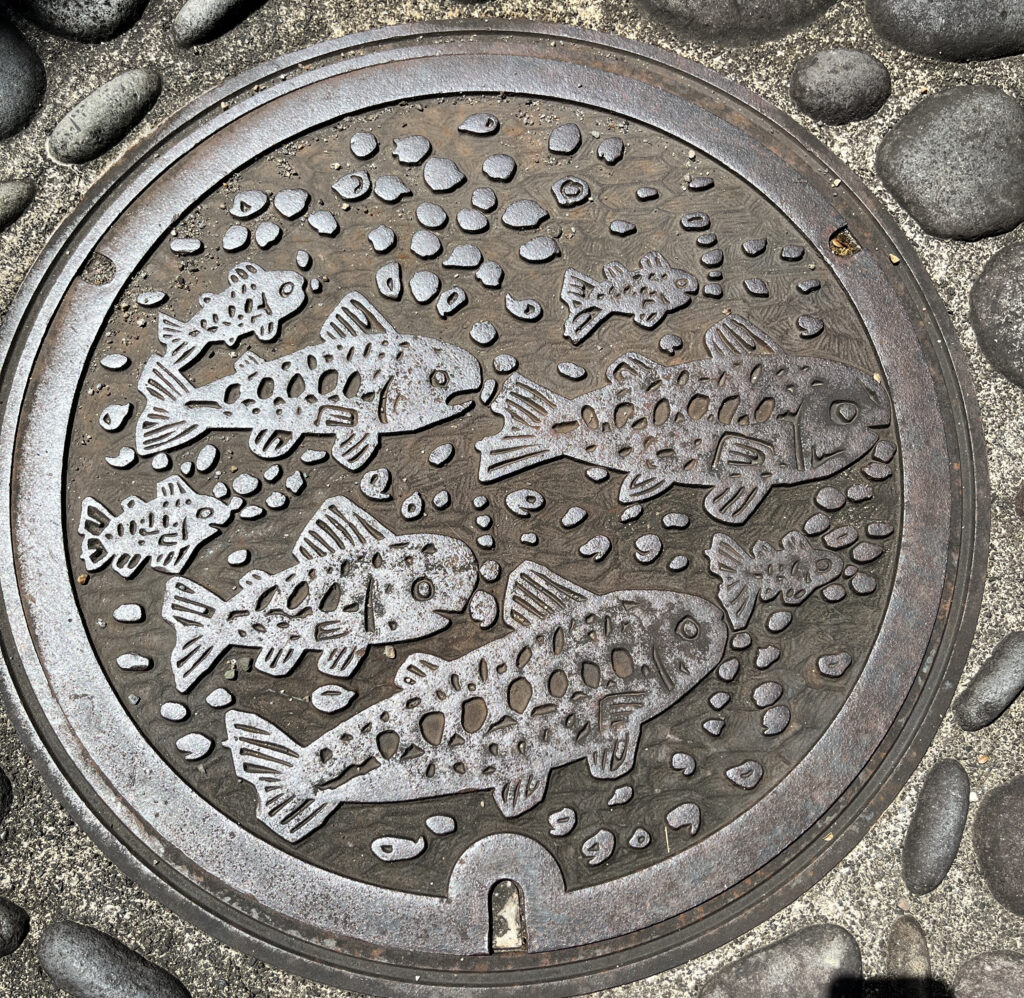
And if they managed to catch an amago, a type of salmonid, that was quite an achievement.
“If you caught an amago, you got praised.”
There was a small hierarchy among the fish in the river.
So What About the Other Fish?
Not every fish a child caught was welcomed with the same excitement.
Small fish such as the Japanese chub (Aburahaya) were sometimes called kusonbo. Apparently, the fish that were called kusonbo were often the ones that were easiest to catch.
The name kusonbo was not simply a nickname invented by children.
A research report by the Gifu Prefectural Museum discusses the name kusobae, an old local name for the Japanese chub. The report explains that the fish was identified as Aburahaya based on the distribution of the name kusobae in historical fish records. That distribution included areas such as Shirotori, Hachiman, and Wara, all in the Gujo region.
In other words, names similar to kusonbo had long been used locally for the Japanese chub in this area.
A child would look at the fish they had caught and hear something like, “Oh, just a kusonbo,” before tossing it straight back into the river.
It seems a little unfair to the fish, but perhaps this was simply part of the local way of seeing the river.
A fish that might have been considered an ordinary or even valuable catch elsewhere could be regarded quite differently in Gujo, where ayu and amago were so familiar.
The fish themselves had their own little ranking.
Children learned not only how to catch fish, but also which fish lived in the river and which ones people were happy to see, simply by playing there.
Ugui, or Japanese dace, were also commonly caught.
They could grow fairly large, so they were fun to catch because they put up a good fight.
The Fish They Caught Became Food
The fish children caught were not always released.
If they caught an amago, of course, it was something to be proud of. But children also sometimes brought home fish such as oikawa, or pale chub.
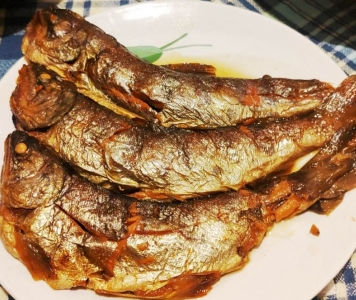
The fish they brought home could be cooked as kanroni, simmered slowly in a sweet, savory sauce.
They played in the river, caught fish, and carried them home.
And at home, the fish became part of the family meal.
Fishing and eating were much more closely connected than they are today.
For children, catching fish was not simply a game.
They naturally learned which fish people were happy to see, and which fish could be eaten.
Summer Days of Jumping from the Rocks
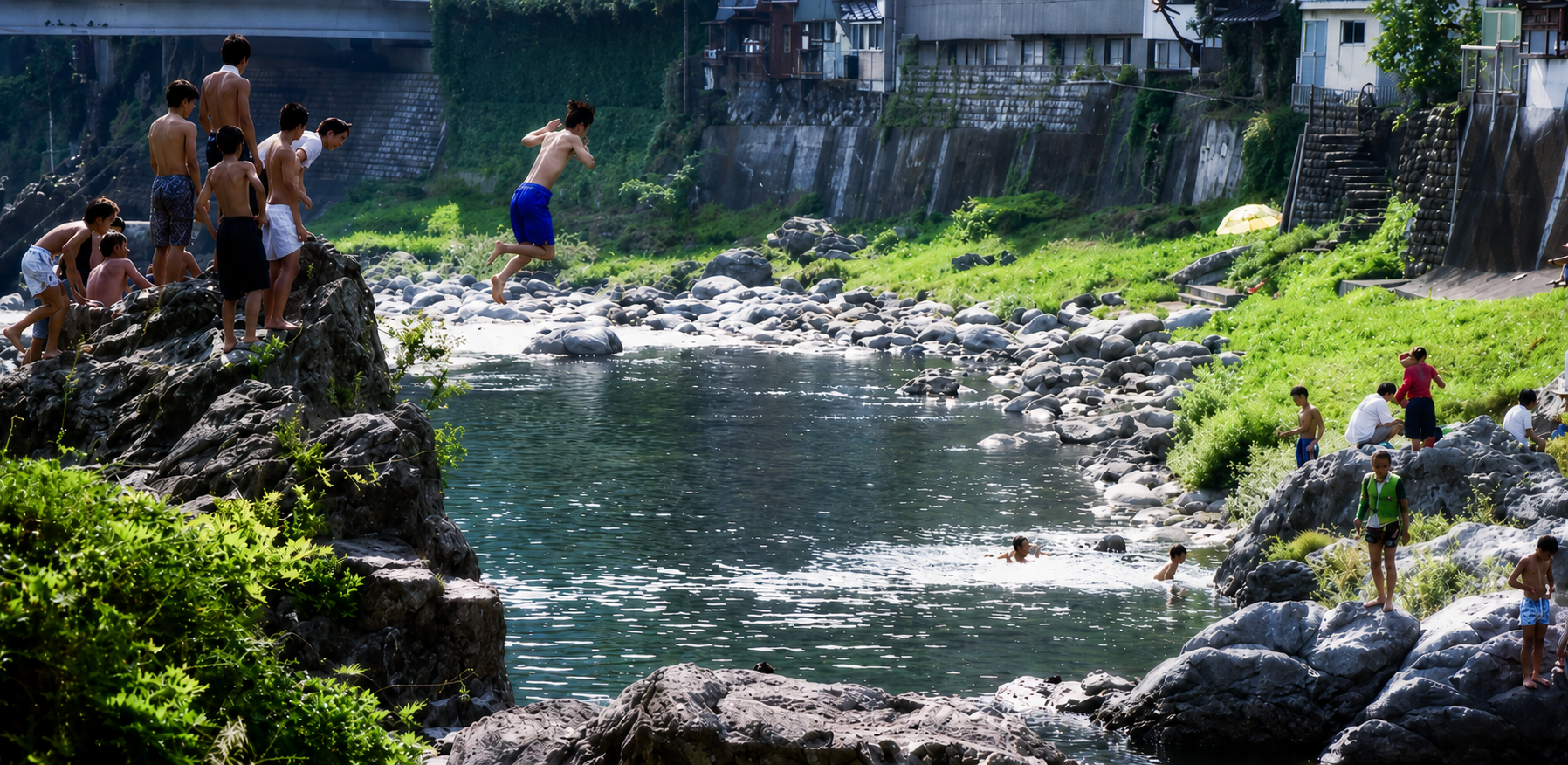
The river was not only a place for fishing.
For children, it was also a place to play freely.
There were rocks from which children could jump into the water.
But they did not simply start by jumping from the highest point.
They began with a small rock.
Then they gradually moved on to higher rocks, taking turns and practicing their jumps.
Starting from a small rock and working their way upward, they gained confidence as they jumped with their friends.
Jumping from a bridge was different.
Children needed an adult’s permission before they could jump from a bridge.
For them, jumping from a bridge must have felt like something especially daring and exciting.
As they played, they learned their own limits and discovered which parts of the river were dangerous.
That, too, was part of playing in the river in those days.
The River Was Both a Playground and a Place to Learn
In summer, adults came to the river to fish, while children came to play.
They caught fish, swam, and sometimes jumped into the water.
The river was a familiar playground for children during their summer vacation.
And as they spent time there, they naturally learned the names of fish, the currents of the river, and the places where they needed to be careful.
Adults fishing for ayu.
Children playing in the river.
Children jumping from small rocks and gradually daring to jump from higher ones.
Someone teaching them, “This is an amago,” or “That’s a kusonbo.”
And families taking the fish caught in the river home to put on the dinner table.
These were the summer scenes that once filled Gujo Hachiman.
Summer vacations like this could once be seen everywhere.
Children played in nature all day—swimming, fishing, jumping into the river, and taking home the fish they caught.
Perhaps this kind of summer vacation is something we can no longer experience in quite the same way.
And yet, in Gujo, these scenes still exist.
When you look at the river in Gujo Hachiman, it can feel as though the summer vacations of children from long ago are still continuing there, just a little.
Reference
The fauna of fresh and brackish water animals in Giru Prefecture in the Meiji period based on “Illustrated guide of aquatic animals living in Mino and Hida” published in 1881, Hiroyuki KANEKO,Katsuhiko SENDO, Gifu Prefectural Museum. Research Reports of the Gifu Prefectural Museum, No. 29 (2008), pp. 9–44.