In old Japan, people did not always have to go to a pharmacy when they needed medicine.
Sometimes, the medicine came to their homes.
This was the system used by Toyama’s medicine peddlers.
A medicine peddler would leave medicines at a family’s home. The family could use them when needed. When the peddler returned, the family paid only for the medicines they had used.
And the peddlers carried more than medicine.
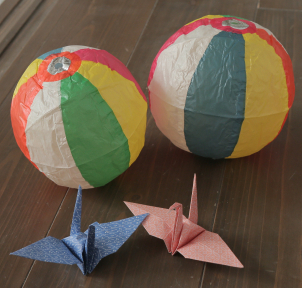
For children, they could be people who brought toys and paper balloons.
For adults, they were visitors who came from faraway places.
Let’s take a look at this home medicine system, which developed during the Edo period and continued into the Meiji period.
The Idea of Keeping Medicine at Home
The medicine trade in Toyama grew greatly during the Edo period.
One of its most important features was a system called senyo-kori.
The basic idea was simple: medicine was left at a customer’s home first, and the customer paid only for what they used when the medicine peddler came back.
For example, a family might have several kinds of medicine at home. If they did not use some of them, they did not have to pay for them.
When the peddler returned, they checked the medicines together.
“This one was used.”
“This one is still here.”
The family paid for what they had used, and the peddler replaced the medicines that were running low.
In other words, what we might call a home medicine supply today was maintained not by a pharmacy, but by an ongoing relationship between the household and the medicine peddler.
What Kind of Medicine Was Kept at Home?
So, what kinds of medicine were kept in these homes?
The Toyama Municipal Museum of Medicine has many examples, including medicines for stomach problems, colds, headaches, and eye problems.
The types of medicines and their formulas also changed from the Edo period to the Meiji period.
One of the most famous was Hangontan.
Hangontan became one of the medicines most closely associated with Toyama’s medicine trade during the Edo period.
So, an old Japanese medicine box was not simply a place to keep one medicine for colds.
Instead, families could keep different medicines for different kinds of problems.
This was one of the basic ideas behind the home medicine system.
What Did Medicine Peddlers Carry?
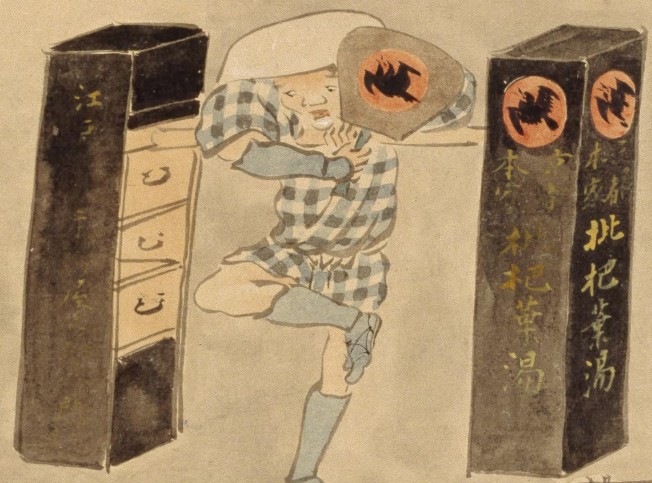
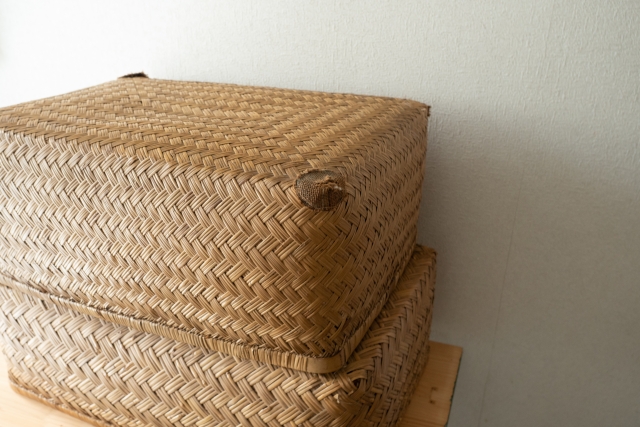
Medicine peddlers used yanagigori, baskets made from willow, to carry their medicines.
The Toyama Municipal Museum of Medicine has tools and belongings that were actually used by medicine peddlers.
They included:
- medicines
- customer records called kakeba-cho
- an abacus
- gifts for customers
The kakeba-cho was a record book used for visiting customers.
Medicine peddlers kept track of which households had their medicines, how much had been used, and other details as they traveled from place to place.
So they were not simply walking around with bags full of medicine.
They delivered medicine, checked what had been used, calculated payments, and replaced medicines.
They carried the tools needed to maintain a long-term business relationship with their customers.
For Children, Were They More Like “People Who Brought Gifts”?
Here is something a little unexpected.
Toyama’s medicine peddlers also brought gifts for their customers.
From the late Edo period, yaku-ban-ga, or medicine trade prints, were given as gifts. From the late Meiji period onward, toys such as paper balloons also became popular gifts.
The Toyama Municipal Museum of Medicine introduces paper balloons and similar items as gifts for regular customers.
For adults, a visit from the medicine peddler was a time to check the medicines and settle the bill.
But for children, it might have been more like:
“I wonder what they brought today?”
The person who came to deliver medicine could also be a welcome visitor for children.
Thinking about it this way makes the old home medicine system feel surprisingly familiar.
Medicine Peddlers Also Brought the Outside World
There is another interesting side to their travels.
Toyama’s medicine peddlers traveled from Toyama to many parts of Japan and repeatedly visited the same customers.
Through these journeys, not only medicine but also people and culture moved from place to place.
For example, medicine trade prints showed subjects that interested people at the time, including kabuki actors, famous places, and calendars.
These prints were given to customers as gifts.
In this way, medicine peddlers also helped bring the culture of their time to people in different parts of Japan.
There were no newspapers or the internet as we know them today. A medicine peddler who regularly came from far away was also a person who connected a household with the outside world.
Along with medicine, prints and other things from distant places could travel from one community to another through these people.
Why Did This System Continue?
The home medicine system continued for a long time, and convenience was not the only reason.
For customers, it meant that medicine was already at home when someone became ill.
For medicine peddlers, regular visits allowed them to check which medicines had been used and replace them.
And by visiting the same households again and again, they could build relationships with their customers.
The system of leaving medicine first was supported by both the medicine itself and an ongoing relationship between people.
What Did the Medicine Peddler Bring Into the Home?
When we think about everything Toyama’s medicine peddlers carried, it is a little surprising.
Medicine.
Records.
An abacus.
And toys and paper balloons for children.
They also brought prints and pieces of culture from distant places.
Medicine peddlers did more than bring medicine to people’s homes for times of illness.
They also brought a little of the outside world into the home.
The home medicine system developed during the Edo period and continued into the Meiji period.
And behind this system was not just medicine, but a connection between the people who visited the homes again and again and the families who welcomed them.
Reference
- History of the Pharmaceutical Industry in Toyama Prefecture
- Toyama Municipal Museum of Medicine: “Toyama Medicine Peddlers — Frequently Asked Questions”
- Toyama Municipal Museum of Medicine: “Exhibits and Collections”
- Toyama Prefectural Library: Materials on Toyama Medicine Peddlers and Medicine-Related Prints