The Gyunabe Restaurant in Rurouni Kenshin
In the original manga Rurouni Kenshin, there is a gyunabe restaurant called Akabeko.
Set in Tokyo during the Meiji era, the story features a restaurant where Kenshin and his friends enjoy beef hot pot.
What was gyunabe like in the Meiji era? And why did it become so popular during this period?
Gyunabe and the Civilization and Enlightenment Movement
During the Meiji era, new food cultures began to spread across Japan. One of the most notable changes was the growing popularity of eating beef.
Until the end of the Edo period, beef was not a common everyday food for most Japanese people. However, after Japan opened its ports to foreign trade in the final years of the Edo period, contact with foreigners increased, and eating beef gradually became more common, especially in cities.
Gyunabe was a dish that combined beef, a relatively new food for many Japanese people, with familiar seasonings such as miso and soy sauce. Unlike Western-style dishes, it could be eaten with chopsticks, which may have helped make it more popular.
The Meiji government also encouraged people to eat meat. Eating meat came to be seen as a symbol of bunmei kaika, or “civilization and enlightenment,” a movement that embraced new ideas and customs from abroad.
In 1872, news that Emperor Meiji had eaten meat attracted considerable public attention.
However, gyunabe did not first appear at that time. Gyunabe restaurants were already operating in the early Meiji era, and the spread of beef eating had begun after Japan opened its ports.
Why Had Beef Not Been Widely Eaten Before?
For centuries, various beliefs and customs, including those influenced by Buddhism, encouraged people in Japan to avoid eating meat. Cattle and horses were also important working animals used for farming and transportation.
However, this does not mean that people in Japan never ate meat. During the Edo period, some people ate meat as a form of medicine, a practice known as kusurigui. There were also examples of beef being marinated in miso and eaten, or given as a gift.
The change during the Meiji era was not that meat eating suddenly began for the first time.
Rather, eating beef gradually gained wider acceptance as part of the culture of a new age and became more familiar in urban life.
Gyunabe Restaurants in Agura nabe
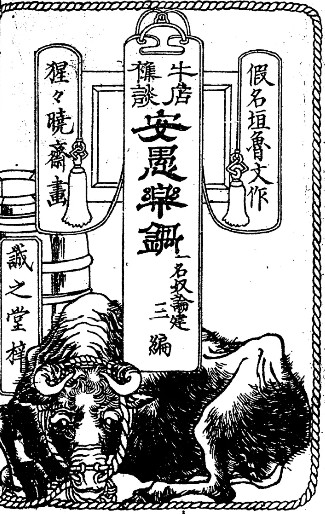
One valuable source for understanding how new gyunabe culture was at the time is Ushiya Zatsudan: Agura nabe, written by Kanagaki Robun.
Published in 1871–1872, Agur anabe portrays the society of the early Meiji era through conversations among people gathered at gyunabe restaurants.
At the time, eating beef was more than simply enjoying a new dish. It could also be seen as a way of showing that one was keeping up with the changing times.
The book describes an attitude in which people who did not eat beef could be regarded as “behind in civilization.” The phrase hirakenu yatsu was used to mock people who had failed to embrace the new ways of the Meiji era. It roughly meant “an uncivilized fellow” or “someone who had not caught up with the times.”
Gyunabe restaurants were therefore not only places to eat. They were also places where people discussed the new culture and values of the Meiji era.
How Much Did Beef Cost?
How affordable was gyunabe at the time?
According to Nedan no Meiji Taisho Showa Fuzokushi, beef cost about 3 sen per 100 grams in 1880.
By comparison, a bowl of mori soba or kake soba—cold soba noodles served with dipping sauce or hot soba noodles in broth—cost about 1 sen in 1887.
The figures come from different years, and the price of raw beef cannot be directly compared with the price of a prepared bowl of noodles. Still, the comparison gives us an idea that beef was not necessarily an everyday ingredient that people could easily afford.
Eating gyunabe may have been a special treat, offering people a chance to enjoy this relatively new food.
What Is the Difference Between Gyunabe and Sukiyaki?
Today, sukiyaki is the more familiar name, but in Tokyo during the Meiji era, the dish was commonly known as gyunabe.
Early gyunabe was often prepared with miso, which helped soften the strong smell of beef. Over time, as the quality of beef and cooking methods changed, seasonings such as soy sauce and sugar became more common. Ingredients such as tofu and shirataki noodles were also added.
In the Kansai region of western Japan, a dish called sukiyaki was prepared by grilling beef before seasoning it. The names and cooking methods therefore differed by region.
The Great Kanto Earthquake of 1923 caused serious damage to gyunabe restaurants in Tokyo. In the years that followed, the name sukiyaki, which had been used in Kansai, became more widely used in the Kanto region as well. This helped shape the food culture we know today.
Rather than being completely separate dishes, gyunabe and sukiyaki developed through regional food traditions and changes over time.
Gyunabe and Everyday Life in the Meiji Era
Gyunabe spread during the Meiji era alongside the growing acceptance of eating meat as part of a new way of life.
Gyunabe restaurants also became places where people could enjoy new food and experience the changes of the age.
Akabeko, the restaurant featured in Rurouni Kenshin, offers a glimpse into this part of Meiji-era food culture.
Today, the name sukiyaki is much more familiar than gyunabe.
Yet behind the sukiyaki we know today lies the story of people in the Meiji era who began to embrace beef as a new food and develop new ways to enjoy it.
References
- Kanagaki Robun. Ushiya Zatsudan: Agur anabe. Seishido, 1871–1872. Source: National Diet Library Digital Collections.
- Nedan no Meiji Taisho Showa Fuzokushi. Compiled by Shukan Asahi. Asahi Shimbun Publishing, 1987.
- Ministry of Agriculture, Forestry and Fisheries of Japan. “Sukiyaki (Tokyo).” Our Regional Cuisines.
- Ministry of Agriculture, Forestry and Fisheries of Japan. “Gyunabe (Kanagawa).” Our Regional Cuisines.