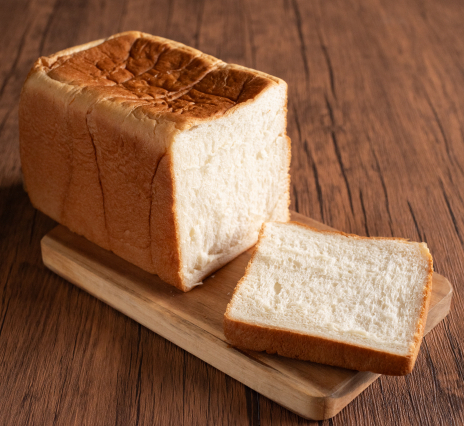
In the morning, we make toast.
We spread butter on it, add jam, or serve it with eggs or ham.
In Japan, this is an ordinary breakfast scene.
But bread was not originally a traditional Japanese food.
So when did this square-shaped or mountain-shaped bread arrive in Japan, and how did it become part of everyday Japanese meals?
“Large Mold-Baked Bread” in Yokohama
When we trace the history of shokupan, or Japanese-style sandwich bread, we arrive at Yokohama in the late Edo period.
In 1862, Robert Clarke, a British resident, opened the Yokohama Bakery in Yokohama.
The bakery is connected to what is now Uchiki Pan. According to Uchiki Pan’s official history, the Yokohama Bakery was the beginning of Japan’s “large mold-baked shokupan.”
At the time, Yokohama had a foreign settlement, and there was a need to supply bread for the foreigners living there.
Because many of the residents were British, the Yokohama Bakery produced large, British-style loaves baked in molds. These breads became an important early form of what would later develop into Japanese shokupan.
Later, Hikotarō Uchiki, who had trained at the Yokohama Bakery, took over the bakery in 1888 and began operating it in Motomachi. In 1899, the business was renamed Yokohama Bakery Uchiki Shoten, leading eventually to today’s Uchiki Pan.
However, there are several theories about the origins of breadmaking in Japan.
Uchiki Pan itself introduces a theory that Heikichi Utsumi began making bread as early as 1860.
For this reason, rather than declaring one particular bread to be “the first shokupan in Japan,” it is better to regard the beginning of large British-style mold-baked bread in late Edo-period Yokohama as an important starting point in the history of shokupan.
Shokupan Was Bread for a Meal
One characteristic of shokupan is that, unlike sweet pastries, it was well suited to being eaten as part of a meal.
There are several theories about the origin of the word shokupan. One suggests that it referred to bread intended as a staple food, while another suggests that the term was used to distinguish it from sweet breads and other types of bread.
Even today, Uchiki Pan sells its mountain-shaped “England” and square “Gold” loaves as breads for meals.
Shokupan itself does not have a particularly strong flavor.
That is precisely why it can be spread with butter or jam.
It can also be eaten with other foods.
It can be toasted or eaten as it is.
In other words, shokupan was an easy-to-use bread that could be combined with many different foods and incorporated into a meal.
This may have been an important characteristic as bread became part of the Japanese diet.
A New Kind of Meal in a Rice-Centered Country
Modern Japan continued to have a diet centered on rice.
So even as bread became more common, people did not suddenly replace rice with bread.
Rather than simply serving as a substitute for rice, shokupan became a new option added to an existing food culture.
From the Meiji period into the Taisho period, Western-style food became increasingly common in urban areas, and the baking industry also developed.
At times when rice prices fluctuated significantly, bread was also seen as an alternative food to rice.
However, it would be too simple to say that bread became popular simply because rice became expensive.
The everyday use of shokupan developed through several overlapping changes, including urban life, the spread of Western-style food, advances in breadmaking technology, and changes in distribution.
Bread did not transform the Japanese table all at once.
Little by little, it found a place there.
Shokupan Could Hold Almost Anything
One of the interesting things about shokupan is how well it goes with almost anything.
Butter.
Jam.
Eggs.
Ham.
Vegetables.
Meat.
Anko.
Because shokupan itself is relatively mild in flavor, the same bread can become part of breakfast or a light meal depending on what is served with it.
This may have been an important characteristic as Japanese people incorporated bread into their own food culture.
In Japan, rice is eaten with side dishes.
Shokupan can also be eaten with side dishes.
Even if eating bread itself was considered Western-style, the basic idea of combining a staple food with accompanying dishes did not necessarily become Western at the same time.
Shokupan could fit into this aspect of Japanese eating habits.
And various ways of eating bread developed.
Sandwiches were one of them.
But if we go into egg sandwiches, katsu sandwiches, and fruit sandwiches, each has a history of its own.
That is a story for another article.
Shokupan gradually became something like a “vessel” for all kinds of foods.
Shokupan and Milk
There is another food that often comes to mind with shokupan.
Milk.
Today, “toast and milk” is such a familiar combination that it hardly needs an explanation.
But milk was not always an everyday food for Japanese people.
From the Meiji period onward, drinking milk gradually became more common, especially in cities, and it also came to be associated with Western-style meals and bread.
After World War II, school lunches further familiarized children with the combination of bread and milk.
As more generations experienced school lunches, bread also became increasingly familiar in the home.
When we look at it this way, even a single slice of shokupan reflects not only the history of bread, but also changes in milk, schools, households, distribution, and many other aspects of modern Japan.
From “Special Bread” to “Everyday Bread”
In late Edo-period Yokohama, large British-style loaves were baked as food for foreign residents.
The tradition was then passed on to Japanese bakers.
Bread gradually moved beyond Western-style restaurants and other special settings and found its way into ordinary breakfasts and light meals at home.
Spread it with butter or jam.
Eat it with other foods.
Have it with milk.
Through these ordinary eating habits, shokupan gradually changed from “Western food” into “everyday food” in Japan.
Japanese people did not abandon rice and choose bread instead.
They added another way of having a meal to a food culture centered on rice.
Perhaps that is what shokupan became in Japan.
And even today, shokupan is combined with much more than butter and jam. It can be eaten with eggs, meat, vegetables, and even fruit.
References
- Uchiki Pan, “History of Uchiki Pan.”
- Sasama, Aishi. Nihon Shokuhin Kogyoshi [A History of the Japanese Food Industry]. Toyo Keizai Shinposha, 1979.
- Ministry of Agriculture, Forestry and Fisheries of Japan, “How was the definition of one loaf of shokupan determined?”