In Studio Ghibli’s Whisper of the Heart, there is a scene in which Seiji’s grandfather prepares a warm meal for her.
The food in anime is appealing not only because it looks delicious, but also because of the warmth and kindness conveyed through a shared meal.
With that comforting bowl of udon in mind, let’s travel back in time.
In 1880, during the Meiji era, nabeyaki udon became hugely popular in Tokyo. According to Keiko Kosuge’s A Chronology of Modern Japanese Food Culture, there were 863 vendors selling nabeyaki udon, compared with just 11 selling yotaka soba, a type of soba sold by street vendors at night.
These numbers stand out, especially when compared with the soba that people enjoyed on the streets after dark. What kind of food was nabeyaki udon in Tokyo at the time?
863 Nabeyaki Udon Vendors and Just 11 Yotaka Soba Vendors!
During the Meiji era, yotaka soba was a familiar sight on the streets at night. Vendors sold soba noodles to people looking for a quick and convenient late-night meal.
At a time when this kind of soba was popular, nabeyaki udon attracted enough customers for hundreds of vendors to sell it.
The figure of 863 gives us a sense of just how popular the dish had become. The record of only 11 yotaka soba vendors makes the popularity of nabeyaki udon stand out even more.
So, what did nabeyaki udon look like in the Meiji era?
A Steaming Clay Pot: Nabeyaki Udon in the Meiji Era
One of the best things about nabeyaki udon is that it can be enjoyed piping hot.
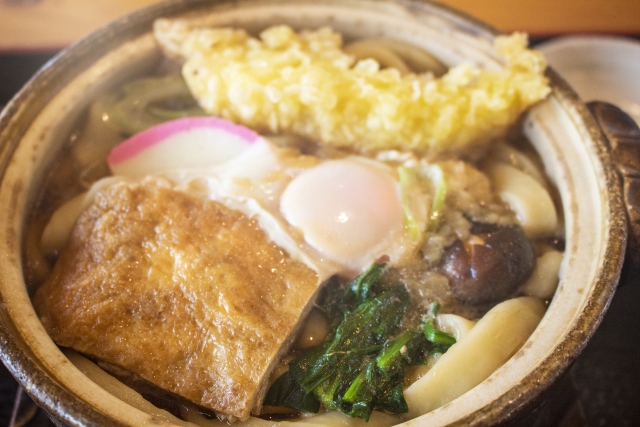
Inside a clay pot, udon noodles and other ingredients simmer together. Lift the lid, and steam rises into the air as the warm aroma of the broth spreads. Even its appearance seems to radiate warmth, making it a perfect dish for winter.
Historical accounts of Meiji-era nabeyaki udon mention ingredients such as kamaboko (Japanese fish cake), fu (wheat-gluten cake), and kuwai (an edible tuber). Comparing these ingredients with those used in nabeyaki udon today offers a fun way to imagine what a bowl looked like back then.
Nabeyaki udon is said to have become popular in Osaka toward the end of the Edo period before spreading to Tokyo in the early Meiji era. By 1880, it had become a major hit in Tokyo.
From a Meiji-Era Craze to the Nabeyaki Udon We Enjoy Today
We cannot know exactly why nabeyaki udon became so popular in Tokyo in 1880 simply by looking at the number of vendors.
A hearty bowl of nabeyaki udon, served in a clay pot that keeps it hot. On a cold winter day, it may have warmed not only people’s bodies but their hearts as well. The figure of 863 remains a fascinating record of the dish’s popularity at the time.
References
- Kosuge, Keiko. A Chronology of Modern Japanese Food Culture (Kindai Nihon Shoku Bunka Nenpyō.). Yuzankaku, 1997.
- Okada, Satoshi. Udon and Soba: One Hundred Delicacies (Udon・Soba Hyakuchin). Bungeishunju, 2006.