What do you want to eat when you have a cold?
You have a fever. Your body feels weak. You have little appetite.
At times like this, even if someone tells you to eat plenty of nutritious food, it can be difficult to swallow.
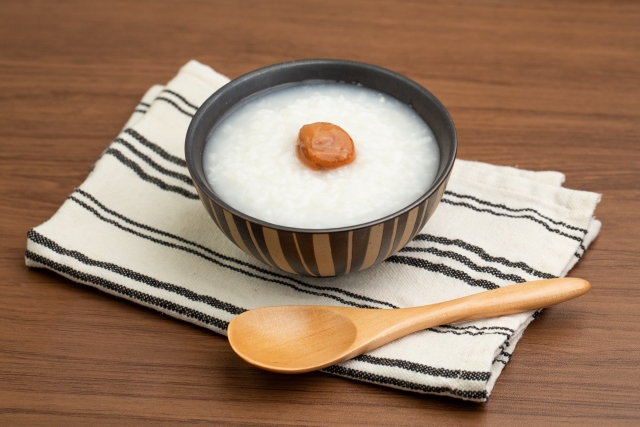
Personally, I would want warm rice porridge or something familiar.
So what did people in Japan eat when they were sick?
When we look at books from the Taisho period, we find books devoted to food for sick people.
They explain how food and cooking could be adjusted according to a person’s illness and condition.
In other words, taking medicine was not the only part of getting well. Food was part of the treatment, too.
Demon Slayer and the idea of “Eat, Sleep, and Recover”
Demon Slayer: Kimetsu no Yaiba is set in the Taisho period, and it also includes scenes of characters resting and eating as they recover from injuries.
In Chapter 128, Tanjiro has been unconscious for seven days after the battle in the Swordsmith Village. While being treated at the Butterfly Mansion, he eats an enormous amount of food.
Goto even worries about him, asking whether it is really okay to eat that much.
The chapter also mentions that Mitsuri Kanroji and Muichiro Tokito slept after the battle and recovered.
Of course, we cannot use a manga as evidence of medical practices at the time.
Still, the idea of resting when your body is weak and eating as you recover is something that probably feels familiar to us today.
So, what did people in the Taisho period actually think about food for the sick?
During Recovery: First, Eat What You Can
In 1919, Ito Naoken published Foods That Become Medicine and Foods for the Sick.
In 1923, Katsumi Shintaro published Cooking Methods for Sick People.
The latter includes sections such as “Dietary Concepts for Various Diseases,” “Various Foods for Sick People,” and “The Relationship Between Therapeutic Diet and Cooking.”
These books show that people thought carefully about what foods to choose and how to prepare them according to the condition of the sick person.
And these ideas were not limited to books.
In Volume 10, Issue 11 of Shufu no Tomo, published in 1926, readers were invited to submit cooking ideas for family members who had lost their appetite because of illness. The best ideas were introduced as prize-winning entries, organized by illness.
Families were finding their own ways to help sick people eat.
When someone has little appetite, the first thing is simply to find something they can eat.
When They Began to Recover: Foods for “Nourishment”
As the appetite returned, the role of food changed.
The idea of jiyō, or nourishment, became important.
The two books mentioned above also introduce milk as a nourishing food. Foods That Become Medicine and Foods for the Sick describes milk as an “appropriate nourishing food,” while also explaining that it is not medicine. Cooking Methods for Sick People includes 33 different dishes using milk.
Eggs and fruit also appear among foods for sick people.
Bananas, which are familiar to us today, were still a relatively new food in Japan at the time. Yet they were already being included in meals for the sick.
And this brings us to beef.
During the Meiji period, beef became increasingly popular, and beef hot pot, or gyunabe, became a fashionable dish.
Beef was not simply a new ingredient. It was also seen as a nourishing food that could help strengthen the body.
Looking at food for the sick, we can see how milk, eggs, fruit, and beef—all part of Japan’s changing food culture in the Meiji and Taisho periods—found their way into people’s diets.
Food Was Also Part of the Medicine
In old Japan, people did not rely on medicine alone when they became sick.
They chose foods according to the person’s condition and added nourishing foods as the person began to recover.
Food was another way of supporting the body’s recovery.
Even today, when we have a cold, we may eat rice porridge or something warm.
When our appetite comes back, we might have an egg or a glass of milk.
Perhaps this feeling has not changed as much as we might think.
Food, too, was once considered part of the medicine used to help the body recover.
References
- Ito Naoken, Foods That Become Medicine and Foods for the Sick, Jitsugyo no Nihon Sha, 1919.
- Katsumi Shintaro, Cooking Methods for Sick People, Dai-Nihon Shokumotsu Kenkyukai, 1923.
- Shufu no Tomo, Vol. 10, Issue 11, 1926, article on food for sick people.