Japan’s Summer Footwear Culture and the Tradition of Replacing the Thong
The Sound of Geta Echoing Through a Summer Night
On a summer night, the sound of karan-koron echoes through the streets.
People wearing yukata gather together and dance in a circle.
On their feet are geta, traditional Japanese wooden footwear.
At Gujo Odori, the sound of dancers’ geta is one of the festival’s most charming features.
Gujo Odori is known as a bon odori festival where everyone is welcome to join the circle, not just watch from the outside. The sound of geta striking the ground becomes part of the rhythm that supports the dance itself.
Geta That Support the Dance
Geta were once a common type of footwear in Japan.
They protected people’s feet on rainy days and were often worn with yukata during the summer, creating a cool and elegant appearance.
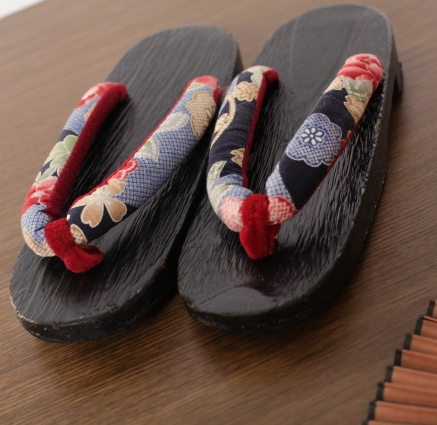
Their simple design consists of a wooden base and a thong that holds the foot in place, but within this simple shape lies the wisdom of everyday Japanese life.
At Gujo Odori, the sound of geta hitting the ground becomes part of the dance.
The movement of the dancers and the rhythm of the geta create a unique sense of unity among everyone in the circle.

Geta Were Practical, but Also Fashionable
Geta were not simply tools for walking.
The thongs came in many colors and patterns, allowing people to enjoy matching them with their yukata.
Even geta with the same shape could create a completely different impression depending on the choice of the thong.
They were practical everyday items, but they were also a way for people to express their own style.
This was a characteristic feature of traditional Japanese life: taking care of the things people used while adding beauty and enjoyment to them.
Geta represent this kind of everyday wisdom.
Replacing the Thong: Using One Pair of Geta for Many Years
One of the most important parts of geta is the thong.
A unique feature of geta is that the thong can be replaced. Since it is the part that touches the foot directly, worn thongs could be replaced with new ones, and they could also be adjusted to fit each person’s feet.
Geta were not items that were simply thrown away when they became old.
Instead, people repaired and cared for them, continuing to use them for many years.
This idea is also connected to kimono culture.
When a kimono became dirty or damaged, it could be taken apart, washed through a process called arai-hari, and then remade so that it could continue to be treasured.
Both geta and kimono reflect a Japanese way of life: rather than replacing things quickly, people cared for them and extended their lives through maintenance.
A Relationship with Tools: Wearing Geta Until the Teeth Are Worn Down
People in the past treasured their geta until they could no longer be worn.
They continued wearing them until the wooden teeth underneath became worn down.
This was not only about avoiding waste. It also showed affection and attachment toward items that had been used for a long time.
Today, we can easily buy new things, but the idea of repairing and continuing to use something precious remains meaningful even now.
The Sound of Geta That Lives On Today
Even today, the sound of geta fills the streets during Gujo Odori nights.
That sound carries memories of a festival passed down through generations, while also representing a living tradition enjoyed by people today.
Japanese traditional culture does not exist only inside museums.
Wearing a yukata, putting on geta, and joining the circle of dancers are experiences that connect the lifestyle of the past with the enjoyment of the present.

Comment