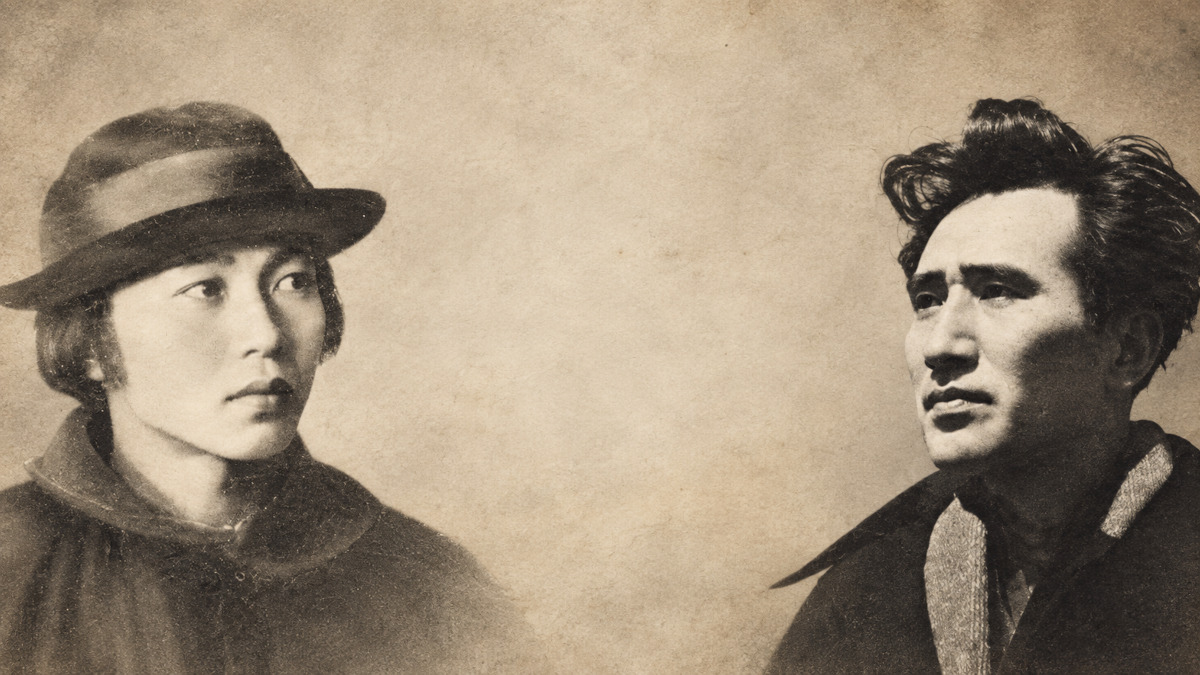
Akiko Yosano appears as a character in Bungo Stray Dogs.
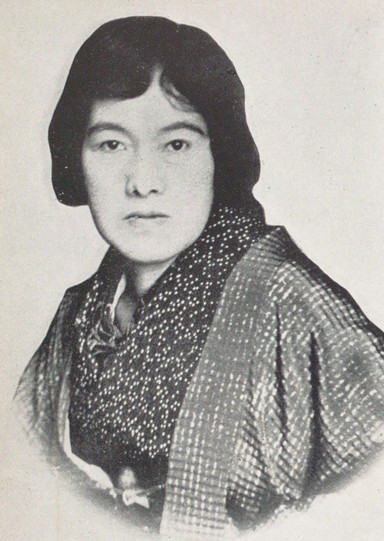
She is portrayed as a rather formidable character in the series, but the real-life Akiko Yosano, who inspired the character, was also a remarkably unconventional woman for someone living in the Meiji and Taisho eras of Japan.
And one thing that surprised me when I began researching her was her experience of childbirth.
In 1916, Akiko Yosano experienced what was described as “pain-free childbirth.”
Akiko Yosano Had 11 Children
Akiko Yosano is best known as a poet.
She is famous for works such as Midaregami (Tangled Hair) and “Kimi Shinitamou Koto Nakare” (“Thou Shalt Not Die”), but in her private life, she was also a mother who raised 11 children.
In 1916, during the Taisho era, Yosano gave birth to her fifth child, a boy. During this delivery, she received medication to relieve the pain of childbirth.
According to anesthesiologist Toshiyuki Okutomi, who has researched the history of pain relief during childbirth in Japan, Yosano received medication for pain relief during labor in 1916.
The method was quite different from modern epidural anesthesia, but it shows that attempts were already being made in Japan more than 100 years ago to reduce the pain of childbirth through medication.
Okutomi’s research examines the use of a combination of Pantopon and scopolamine in connection with Yosano’s delivery.
And there is something particularly interesting about this story.
Yosano herself wrote about the experience.
The title was:
“Experiencing a Pain-Free Childbirth.”
That is what makes this story so fascinating.
Was Childbirth Simply “Supposed to Hurt”?
When we think about childbirth in the past, we tend to imagine that women had no choice but to endure the pain because medical care was not as advanced as it is today.
Of course, the medical environment was completely different from what we have now.
But that does not mean women in the past never thought about how to reduce the pain.
In fact, historical research into childbirth in Japan shows that medication was already being used to relieve the pain of childbirth by the late Meiji period.
Yosano’s own experience is one example of an attempt to use the medical knowledge and technology available at the time to make childbirth less painful.
In other words,
the image of women in the past simply enduring the pain of childbirth deserves a second look.
“Childbirth is painful, so you just have to endure it.”
It was not necessarily the only option.
And Yosano herself left behind an account of her experience, titled “Experiencing a Pain-Free Childbirth.”
How to deal with the pain of childbirth was also something women could think about and, to some extent, choose for themselves.
“Kimi Shinitamou Koto Nakare,” Familiar to Bungo Stray Dogs Fans
If you know Akiko Yosano through Bungo Stray Dogs, there is probably another work that comes to mind.
“Kimi Shinitamou Koto Nakare” — “Thou Shalt Not Die.”
Yosano wrote the poem in 1904, during the Russo-Japanese War, thinking of her younger brother, who was serving on the battlefield at Port Arthur.
At a time when the prevailing sentiment was that dying for one’s country was something to be expected, Yosano called out to her brother: “Do not die.”
War and childbirth are, of course, completely different matters.
Still, when we think about the side of Yosano that refused to simply accept something because everyone else considered it inevitable, there is something rather interesting here.
Death in war.
Enduring pain in childbirth.
Of course, these two things cannot be equated.
Even so, Yosano was a woman who expressed her own feelings in words rather than simply accepting things with a “that’s just how it is” attitude.
Knowing that, her decision to experience what she herself called a “pain-free childbirth” somehow feels very much like Akiko Yosano.
What Does It Mean to Be Born?
And this is where I became most curious.
When I started researching pain relief during childbirth, I found myself wondering not only about childbirth itself, but also:
“How did people in the past think about the day a child was born?”
Today, the day we are born is our “birthday.”
We celebrate with cakes and presents every year.
But what was it like in Japan in the past?
Did people celebrate birthdays in the same way we do today?
And when a child was born, who chose the child’s name? When was it chosen, and how?
Starting with the pain of childbirth, we arrive at:
Being born.
Receiving a name.
Celebrating a birthday.
The culture surrounding the birth of a child was not quite the same as it is today.
Akiko Yosano’s experience of pain-free childbirth can therefore be an entry point into exploring what it meant to be “born” in Japan more than a century ago.
Taisho 5 — 1916.
Akiko Yosano, the poet who had 11 children, did not simply accept the pain of childbirth as something a woman was expected to endure.
Through her own experience of “pain-free childbirth,” and the account she left behind, we can catch a glimpse of what women more than 100 years ago thought about childbirth and what choices were available to them.
And then another question comes to mind—
How did the family celebrate the day that child was born?
Or,
What kind of name did they give the child?
Beyond the moment of birth, there is still so much of everyday life in the past waiting to be discovered.
References
- Toshiyuki Okutomi, “Was the First Case of Painless Childbirth in Japan Akiko Yosano’s Delivery?” Masui [Anesthesiology], 60(10), 2011, pp. 1214–1220.
- Toshiyuki Okutomi, “Drug-Induced Painless Childbirth Was Already Practiced in Japan by the Late Meiji Period: Tracing Pantopon-Scopolamine Used for Akiko Yosano,” Masui [Anesthesiology], 62(2), 2013, pp. 239–243.
- Toshiyuki Okutomi, “The History of Painless Childbirth,” Obstetrics and Gynecology Practice, 63(8), 2014, pp. 1083–1089.
- Akiko Yosano, “Kimi Shinitamou Koto Nakare” (“Thou Shalt Not Die”), Myojo, September 1904. Reprinted in Ren’i, Hongo Shoin, 1905.
- Akiko Yosano, “Experiencing a Pain-Free Childbirth,” in What Do We Seek?, 1917.