When you hear the Japanese word jogakusei (female student), what kind of image comes to mind?
Some people may picture a young woman wearing a hakama, like the heroine of Haikara-san ga Tōru, a manga and anime series set in the Taisho era.
The heroine, Benio Hanamura, is portrayed as a bright and lively female student. Through works like this, the image of the “Taisho-era female student” has become familiar to modern audiences.
But what was school life really like for female students in the Meiji and Taisho eras?
At girls’ schools, students studied subjects such as Japanese and foreign languages. They also learned sewing, an important part of girls’ education at the time.
When we think of female students, we may also imagine hakama and the distinctive language associated with female students.
But their lives were about much more than that.
They spent time with friends, sometimes lived in school dormitories, and enjoyed books, magazines, music, and other forms of popular culture that were spreading at the time.
As girls’ schools became an important part of women’s education, what did female students study, and what was everyday life at school like?
- What Did Female Students Wear?
- What Kind of Language Did Female Students Use?
- What Was Everyday School Life Like?
- What Did Female Students Study?
- What Did Female Students Read and Enjoy?
- What Happened After Graduation?
- What Kind of Girls Went to Girls’ Schools?
- What Kind of Era Did Female Students Live In?
What Did Female Students Wear?
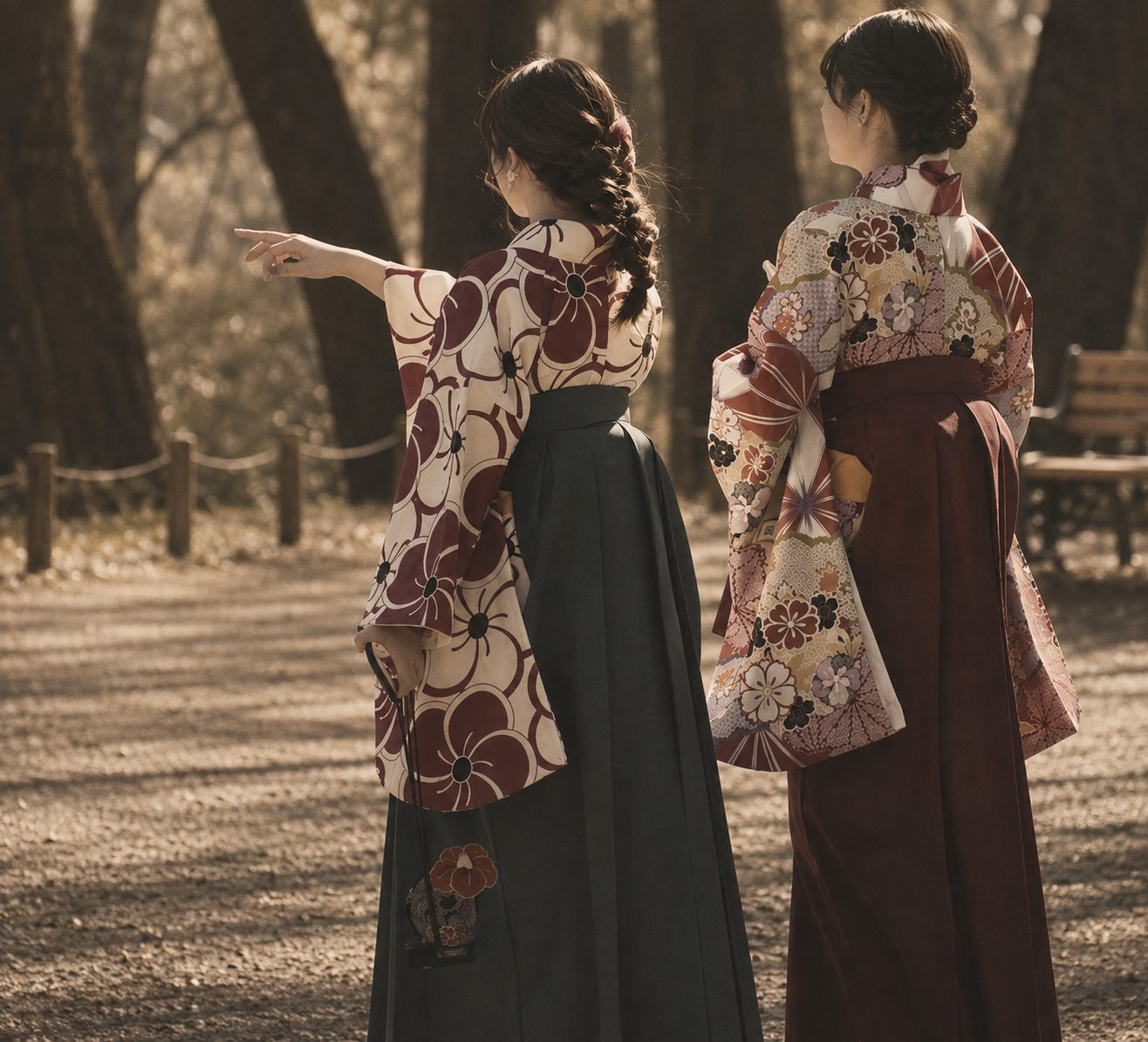
One of the best-known images of a female student is the hakama.
During the Meiji era, hakama became popular as schoolwear for female students. Over time, students wore them in different colors and styles.
As traditional Japanese clothing and Western-style clothing began to mix, the clothing worn by female students also changed.
What Kind of Language Did Female Students Use?
Female students were also known for their distinctive ways of speaking.
Expressions such as teyo and dawa are still associated with the image of female students in the Meiji and Taisho eras.
However, this so-called female student language was not necessarily used by every female student.
It is important to distinguish between the language that students actually used and the “feminine student speech” that was shaped by literature and other forms of media.
What Was Everyday School Life Like?
A female student’s day was about more than classes.
They studied Japanese, foreign languages, sewing, and other subjects. They spent time with friends and took part in school events.
At some schools, female students also lived in school dormitories.
Their everyday lives can be seen in many small details: the journey to school, breaks between classes, lessons, and life in the dormitory.
What Did Female Students Study?
Girls’ schools in modern Japan taught a wide range of subjects.
Students studied not only Japanese and foreign languages, but also sewing and other subjects closely connected to girls’ education at the time.
The curriculum varied depending on the school and the period.
What Did Female Students Read and Enjoy?
Female students did not spend all their time inside the classroom.
They were interested in novels, magazines, music, fashion, and other forms of popular culture that were becoming more widespread.
Magazines for female students helped create a culture that could be shared by young people of the same generation.
School was one part of their lives. The culture they enjoyed outside school was another. Together, these shaped the everyday world of female students.
What Happened After Graduation?
There was no single path after graduating from a girls’ school.
Some continued their education at higher schools, while others became teachers, got jobs, or married.
Their choices depended on factors such as the period, the school they attended, and their family circumstances.
Looking at what happened after graduation can also help us understand the social changes surrounding women in modern Japan.
What Kind of Girls Went to Girls’ Schools?
Of course, we cannot treat all female students as if they had the same background.
What kinds of families sent their daughters to girls’ schools? What kinds of schools existed in different regions?
These questions were shaped not only by the education system, but also by family circumstances and society.
We will look more closely at the backgrounds of girls who attended girls’ schools in a separate article.
What Kind of Era Did Female Students Live In?
Female students were more than just “young women from the past who wore hakama.”
They studied, talked with their friends, enjoyed reading and new forms of popular culture, and lived through a period of major social change.
Their school lives also reflected the values and changes of the time.
Following the everyday lives of female students can help us understand how women’s lives were changing in modern Japan.
This article has introduced the world of female students from a broad perspective.
Clothing, language, school subjects, dormitories, reading and popular culture, and life after graduation.
By looking more closely at each of these subjects, we can begin to see the female students of modern Japan not simply as an image from the past, but as young people living their everyday lives in a changing society.
References
- Inagaki, Kyoko. Jogakko to Jogakusei: Kyoyo, Tashinami, Modern Bunka [Girls’ Schools and Female Students: Education, Manners, and Modern Culture]. Chuo Koron Shinsha, 2007.
- Honda, Kazuko. Jogakusei no Keifu: Saishoku Sareru Meiji [The Genealogy of Female Students: Meiji Japan in Color]. Expanded and revised edition. Seikyusha, 2026.
- Japan Women’s University Institute for Women’s Education, ed. Taisho no Joshi Kyoiku [Women’s Education in the Taisho Era]. Kokudosha, 1975.
- Japan Women’s University Institute for Women’s Education, ed. Meiji no Joshi Kyoiku [Women’s Education in the Meiji Era]. Kokudosha, 1967.