When you hear the Japanese word ensoku (school excursion), what comes to mind?
Perhaps a class trip to a zoo or aquarium, a day at a park, or a hike in the mountains. Some schools travel by bus or train, while others walk. There may be a packed lunch, games, free time, and plenty of chatting with friends.
And the interesting thing is: all of these can be an ensoku.
If you watch Japanese anime, you may have noticed that school excursions seem surprisingly different from one school to another. One class may take a train to a zoo, while another spends hours walking through the countryside.
So what exactly is a Japanese school excursion?
The answer becomes clearer when we look at the history of the word itself.
- “Ensoku” Originally Meant Going Far on Foot
- “Ensoku” and “Marching” Were Once Surprisingly Close
- An Autumn Excursion to Asukayama in 1896
- School Excursions Had Many Different Purposes
- And Then There Was the Packed Lunch
- School Excursions Can Be Very Different Depending on the School
- The “Far on Foot” Part Still Exists Today
- An Excursion Is Not Just About Walking—or Just About Having Fun
“Ensoku” Originally Meant Going Far on Foot
The word ensoku originally had a very literal meaning: going somewhere far away on foot.
It did not originally refer specifically to a school event.
As Japan developed its modern school system during the Meiji era (1868–1912), schools increasingly began taking students outside the classroom. By the 1870s and 1880s, there were already examples of school outings called ensoku, sometimes combined with athletic events or other forms of outdoor education.
One particularly famous example came in 1886, when the Tokyo Higher Normal School organized a long-distance outing known as Chōto Ensoku, literally “long-distance excursion.” It involved walking long distances while also incorporating physical training and visits to places of cultural and educational interest.
In other words, an early school excursion could involve considerably more walking than many people would expect today.
“Ensoku” and “Marching” Were Once Surprisingly Close
Meiji-era schools placed considerable importance on physical training, group activity, and discipline.
Some long-distance excursions involved students traveling together in formation, making them look rather similar to a march or military-style exercise. Terms such as chōto ensoku (“long-distance excursion”) and kōgun (“march”) were sometimes used for activities involving long-distance walking.
But that does not mean that every early excursion was simply military training.
Students might walk for exercise, observe nature and the surrounding town, study geography, or learn about places outside the classroom. Once they reached their destination, they might eat lunch and have free time to play.
That combination can be seen particularly well in one famous example from the Meiji era.
An Autumn Excursion to Asukayama in 1896
On November 7, 1896, teacher Higuchi Kanjiro took a second-grade class from the attached elementary school of the Tokyo Higher Normal School on an excursion to Asukayama.
There were 44 students in the class, and 37 took part.
The group traveled from Ueno’s Shinobazu Pond to Asukayama, a distance of roughly 6 kilometers.
But the walk itself was not simply exercise.
Along the way, the students observed their surroundings, including the pond, buildings and museum in Ueno, fields, factories, railways, and other features of the landscape. At Asukayama, they ate lunch and had time to play freely.
In a single day, the excursion brought together:
walking, observing, learning, eating, and playing.
That is important because it shows why it is difficult to describe old school excursions simply as “strict” or “training-oriented.”
Even in the Meiji era, an excursion could contain both learning and enjoyment.
School Excursions Had Many Different Purposes
There was never just one purpose behind an ensoku.
Depending on the school and the period, an excursion might involve:
- physical exercise
- practicing group activities
- observing nature and the local environment
- seeing things that had been studied in the classroom
- learning about geography, history, or the surrounding community
- spending time with teachers and classmates outside school
- eating and playing together
These purposes could overlap within the same outing.
This is why it is too simple to say that old school excursions were mainly about exercise, while modern excursions are mainly about having fun.
The balance changed over time and differed from school to school, but several of these elements could exist together from the beginning.
And Then There Was the Packed Lunch
Of course, no discussion of a Japanese school excursion would be complete without mentioning the bento, the packed lunch.
Eating lunch outdoors with classmates, talking with friends, and having some free time to play are an important part of the image of an ensoku.
And this is not simply a modern addition.
As we saw in the Asukayama excursion of 1896, students also ate lunch and played freely after reaching their destination.
The “educational” side and the “fun” side of a school excursion were not necessarily separate things.
School Excursions Can Be Very Different Depending on the School
This is one reason why Japanese school excursions can look so different in anime and manga.
One school might visit a zoo or aquarium.
Another might go to a park or historical site.
Another might spend the day hiking in the mountains or observing nature.
Some excursions involve buses or trains. Others involve a surprisingly long walk.
Historically, too, schools used excursions for different combinations of learning, exercise, group activities, nature observation, and recreation.
So there is no single standard form of the Japanese ensoku.
The “Far on Foot” Part Still Exists Today
Even today, some school excursions preserve something close to the original meaning of the word: going a long way on foot.
When I was in high school, for example, we walked for about two hours to reach a mountain.
The funny part was that we took a bus back.
It took only about 15 minutes.
I remember thinking:
“…Wait. It only takes 15 minutes by bus?”
Suddenly, those two hours of walking seemed rather absurd.
But perhaps that is exactly the point.
If getting to the destination were the only purpose, taking the bus would obviously make more sense. Walking itself can be part of the experience—the sense of physically traveling somewhere together, rather than simply arriving there.
That old idea of putting your feet to work and going somewhere “far” has never completely disappeared.
An Excursion Is Not Just About Walking—or Just About Having Fun
Today, a Japanese school excursion might involve a long walk, a bus ride, a museum visit, a nature observation activity, a packed lunch, or simply a day of playing with friends.
And the same was true in different ways more than a century ago.
An ensoku can mean:
- going somewhere farther than usual,
- going somewhere together with classmates,
- seeing and learning something outside the classroom,
- eating together,
- playing together,
or several of these at once.
Perhaps that is why the word has survived in such a broad range of school activities.
Rather than having one fixed meaning, ensoku has always had room for different ways of going somewhere together.
So when you see a Japanese anime character setting off on a school excursion, don’t be surprised if one class takes a train to the zoo while another walks for hours through the mountains.
They can both be having an ensoku.
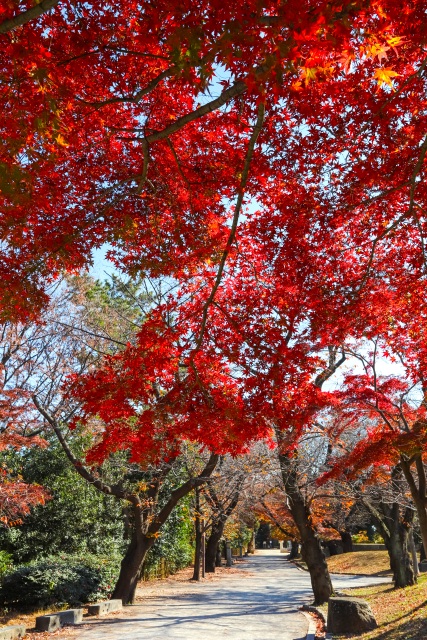
And if the excursion happens in autumn, with a long walk through the trees followed by a bento eaten outdoors, you are seeing something that has a surprisingly long history in Japanese school life.
References
- Kojo, Kenichi et al. “Historical Study of Outdoor Education in Schools: Focusing Particularly on School Excursions in the Meiji Era.” Japanese Journal of Physical Education, Vol. 15, No. 5, 1971.
- Moriyama, Kenichi. “The Historical Origins of Integrated Learning in Japan: The ‘Asukayama Excursion’ Experiment by Higuchi Kanjiro.” Journal of Educational Practice, No. 1, 1997.
- Hayashi, Masami. “A Curriculum Study of the Prehistory of Special Activities: Focusing on the Educational Practices of Higuchi Kanjiro, Tanahashi Gentarō, and Higuchi Chōichi at the Elementary School Attached to Tokyo Higher Normal School in the Late Meiji and Taisho Periods.” 1999.
- Kita City Asukayama Museum. “Looking Back at the ‘Asukayama Excursion.’”