Autumn was not only the season of harvest. It was also a season when people enjoyed the beauty and feeling of the season itself.
In old Japan, people celebrated local festivals, admired the moon and autumn leaves, enjoyed chrysanthemums, and listened carefully to the sounds of insects.
In this article, we will look at some of the traditional autumn activities and pastimes that were enjoyed in Japan from the Edo period through the early Showa periods”. If you are interested in autumn activities for schools and children, please also see our article, “Enjoying Autumn with Children.”
Momijigari — Enjoying the Autumn Leaves
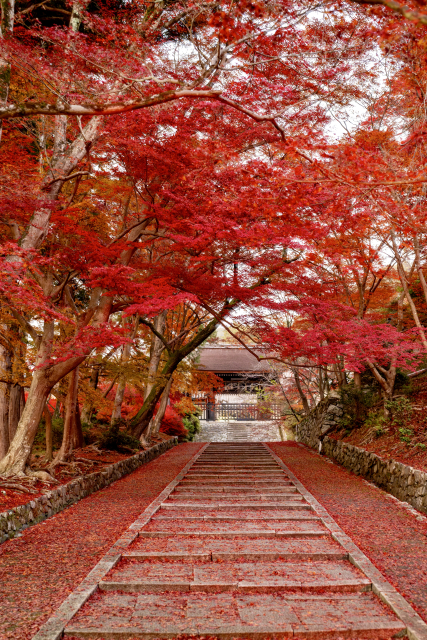
Momijigari means going into the mountains or countryside to enjoy the beautiful colors of autumn leaves.
Despite the word gari, which means “hunting,” people did not actually pick or collect the leaves. Like cherry blossom viewing in spring, momijigari was a way to enjoy the beauty of the season by going out into nature.
During the Meiji period, the development of railways gave people more opportunities to travel farther from home.
Autumn Festivals — Celebrating the Season Together
In autumn, festivals were held at shrines in many parts of Japan.
Many autumn festivals were connected with giving thanks for the harvest or praying for a good harvest. In some traditions, newly harvested rice and other crops were offered at shrines.
But festivals were not only religious ceremonies. They were also occasions for local people to gather and enjoy food stalls, performing arts, dancing, and other forms of entertainment.
Autumn festivals were also occasions for communities to celebrate the season of harvest together.
Tsukimi — Enjoying the Autumn Moon
One of the best-known autumn traditions in Japan is tsukimi, or moon viewing.
On the night of the full moon, people admired the moon and made offerings such as pampas grass and rice dumplings.
Looking at the moon was more than simply observing the night sky. It was also a time to feel the changing seasons and think about the harvest and the gifts of nature.
And the pleasure of tsukimi was not only about the moon. It was also connected with seasonal foods such as rice dumplings and taro.
The Chrysanthemum Festival — Enjoying Autumn Chrysanthemums
September 9 is known as Choyo-Festival, or the Chrysanthemum Festival.
It is one of Japan’s traditional Five Seasonal Festivals. People decorated their homes with chrysanthemums and, in some traditions, enjoyed chrysanthemum sake.
Today, Choyo is less familiar than some of the other seasonal festivals, but it is an autumn tradition that has continued since the Edo period.
The culture of appreciating chrysanthemums later became connected with chrysanthemum exhibitions and competitions.
Mushikiki — Enjoying the Sounds of Autumn
Autumn was not enjoyed only through things people could see.
During the Edo period, people also enjoyed mushikiki, or listening to the sounds of insects in places such as fields and gardens.
They would listen carefully to the sounds of crickets and other insects and enjoy the quiet autumn night.
Just as we look at autumn leaves or the moon today, people in the past also paid attention to small changes in nature and listened to the sounds of the season.
Enjoying Autumn
Autumn leaves, festivals, the moon, chrysanthemums, and the sounds of insects.
When we put these things together, we can see that there was no single way for people in old Japan to enjoy autumn.
Some celebrated together with their communities, while others went out with family or friends. Some admired the moon or flowers, while others simply listened to the sounds of insects.
Autumn was a season of harvest, but it was also a season for experiencing and appreciating the season itself.
Explore each of these autumn traditions in more detail in the articles below.