In old Japan, dealing with illness was not only about treating the body.
People also tried to keep away or calm the things they believed could bring disease.
One idea was that diseases could be brought by beings known as yakubyō-gami (gods of disease) or yakushin (disease spirits).
However, this does not mean that people in old Japan believed that every illness was caused by a god. Ideas about illness varied depending on the time and place.
Still, in many local customs, we can see the idea that illness was not only something inside the human body, but something that could come from outside.
So, if something that brought disease could come from outside, how did people try to drive it away?
Sending Disease Spirits Outside
One of the most straightforward ways was to send the thing believed to bring disease outside the community.
From the home to the outside.
From the village to the boundary between the village and the outside world.
In some regions, people placed the disease spirit or the illness onto objects such as dolls or straw figures and carried them outside the village.
People could not simply take an invisible disease in their hands and throw it away.
Instead, they sometimes placed the unseen danger onto something else and sent it away.
In this way, they created a concrete way to “send the disease outside.”
Entrusting the Illness to a Substitute
People also sometimes placed illness or misfortune onto something other than a person or a house.
Dolls and objects made of straw could serve as substitutes.
These objects were more than simple decorations.
They could help separate the illness or misfortune that people feared from their homes and communities.
By carrying these objects outside, throwing them away, or otherwise getting rid of them, people tried to send the danger away with them.
Keeping Disease Out
People did not only try to drive disease away after someone became sick.
There were also customs intended to keep illness and misfortune from entering the home in the first place.
People placed protective charms or talismans near entrances, wore certain objects, or placed them along the boundaries of their homes.
These objects were believed to have the power to protect people from disease.
Some of these customs may seem strange to us today.
But behind them was a very familiar wish:
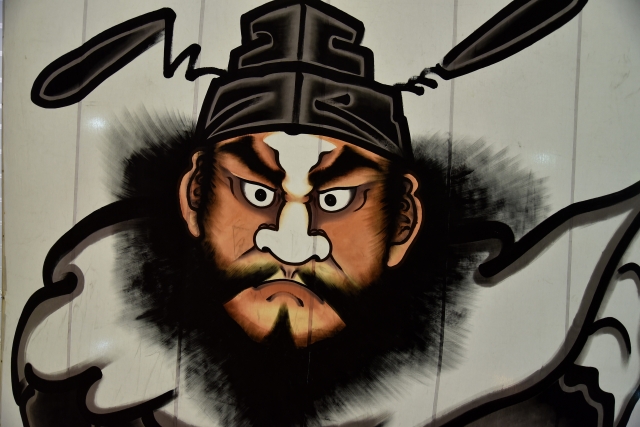
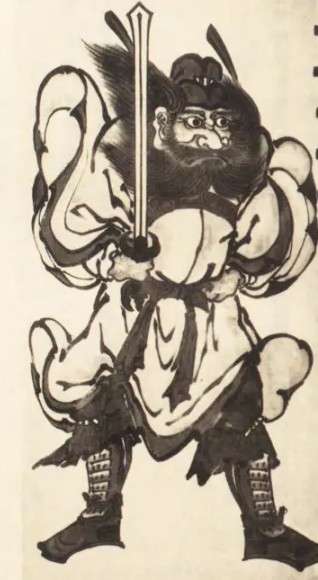
Shōki became especially associated with protection against epidemics and was often depicted as a powerful figure who drives away demons. Images of Shōki were placed in or around homes as a form of protection.
to protect ourselves and our families from illness.
It Was Not Only About Driving Disease Away
There is another interesting point.
People did not always try simply to drive away the beings believed to bring disease.
Sometimes they tried to purify the area or ward off the danger. At other times, they tried to calm the beings believed to cause disease. At other times, they tried to calm them.
In other words, people used different approaches:
Drive them away.
Keep them at a distance.
Calm them.
The methods varied from place to place and from one custom to another.
People feared illness, but they also tried to find ways to keep it away from their everyday lives.
These customs show one way in which people in old Japan faced the fear of disease.
Sending the God of Colds to the Village Boundary
Among these customs were practices in which a being believed to bring colds was sent to the boundary of the village.
Why did people go all the way to the village boundary?
Village boundaries and crossroads had a special meaning in many traditional communities.
They marked the line between “inside” and “outside.”
I wrote more about the custom of sending the God of Colds to the village boundary in this article:
Why Did People in Old Japan Send the God of Colds to the Village Boundary?
What Does It Mean to “Keep Disease Away”?
Today, we explain the causes of disease using things such as viruses and bacteria.
Because of this, old customs for driving away disease spirits may seem very different from modern medicine.
But the wish to protect ourselves and our families from illness is not so different from what people felt in the past.
People expressed this wish through prayers, charms, rituals, and local customs.
They did not only try to “cure” illness.
They also tried to keep away whatever they believed could bring illness.
This was another way in which people in old Japan tried to live with the fear of disease.
References
- Ōshima, Tatehiko. Yakubyō-gami to Sono Shūhen [Disease Gods and Their Surroundings]. Iwasaki Bijutsusha, 1985.
- Takaoka, Hiroyuki. “Toshi to Ekibyo: Kinsei Ōsaka no Kaze no Kami Okuri” [Cities and Epidemics: The Sending Away of the God of Wind in Early Modern Osaka]. Japanese Journal of Folklore, no. 175, 1988, pp. 20–37.
- Ogino, Natsuki. “Denshō to Kaiga ni Miru Ekibyō-gami: Kinsei Ikō ni Okeru Hōsō to Hashika no Hyōshō” [Disease Gods in Folklore and Paintings: Representations of Smallpox and Measles from the Early Modern Period Onward]. Setsuwa and Folklore Studies, no. 19, 2011, pp. 88–109.
- Adachi City Museum. “Folk Customs for Driving Away Epidemics.”