Cool Breezes and Beauty Found in the Darkness
Summer nights.
The intense heat of the day slowly fades, and the evening sky gradually changes its colors.
Today, when we feel hot, we turn on the air conditioner. When darkness falls, we brighten our surroundings with electric lights.
However, for people in the past, summer nights were not simply a time to escape the heat or eliminate darkness.
They felt the breeze.
They enjoyed gentle lights.
They gathered together and listened to stories.
Summer nights were filled with many forms of wisdom that allowed people to appreciate the beauty of the season.
- Finding Coolness — Spending the Night with the Wind
- Enjoying the Darkness — When Light Was Precious
- Enjoying Light — From Edo Fireworks to the Night Skies of the Meiji Era
- Nights of Connection — Summer Festivals and Bon Odori
- Cooling the Summer with Fear — The Imagination of Summer Nights
- Summer Nights Were Found in the Darkness
Finding Coolness — Spending the Night with the Wind
In the days before air conditioning, people used the power of nature to survive the summer heat.
One of the best examples was the mosquito net.
Although it was a practical tool to protect people from mosquitoes, a hanging mosquito net also became a symbol of summer nights.
People opened the windows, let the breeze flow through, and fell asleep while listening to the sounds of insects.
Instead of completely eliminating the heat, they enjoyed the feeling of coolness through the wind and the sounds of nature.
This was a lifestyle that existed in harmony with the natural world.
Spending evenings on verandas or beside rivers was also a beloved summer tradition.
The cool breeze after sunset, the presence of other people, and the sound of flowing water created a different atmosphere from the daytime.
Summer nights were a time when people experienced the season through all five senses.
Enjoying the Darkness — When Light Was Precious
Modern nights are filled with streetlights and electric illumination.
However, nights in the past were much darker than they are today.
Because of this, even a small source of light held a special charm.
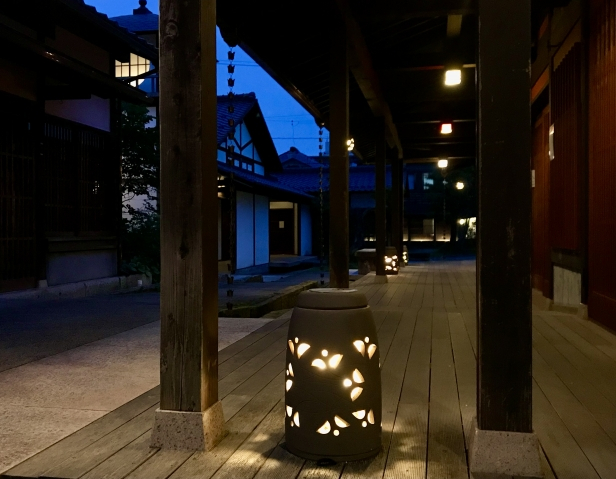
The soft glow of paper lanterns and traditional lamps.
The shadows created by flickering flames.
Light appearing in the darkness was not merely a tool for seeing; it was part of the beauty of the night itself.
During the Meiji period, new technologies began to change the way people enjoyed the night.
The magic lantern, known as gentō, became a form of entertainment that projected images with light in dark rooms.
Darkness was not an empty space. It was a stage where imagination could grow.
Enjoying Light — From Edo Fireworks to the Night Skies of the Meiji Era
When we think of beautiful summer nights, fireworks are one of the first images that come to mind.
During the Edo period, fireworks became popular alongside evening cool breezes by rivers.
However, for the people of Edo, fire was not only something beautiful.
In the densely built wooden city of Edo, fires were a constant threat.
The same fire that was essential for daily life could also destroy entire neighborhoods.
That is why fireworks, controlled by human hands and transformed into beautiful lights in the night sky, had a special meaning.
People took the dangerous power of fire and changed it into something beautiful.
Then, during the Meiji period, advances in science and technology brought even more colorful fireworks.
The skills developed by Edo-era craftsmen combined with new scientific knowledge, creating brighter and more vivid displays across the night sky.
Nights of Connection — Summer Festivals and Bon Odori
What made summer nights special was not only the wind and the light.
Gathering with others was also an important part of enjoying the season.
As evening arrived, lanterns were lit, and people wearing yukata stepped out into the streets.
The smell of food stalls.
The sound of drums.
The voices of people enjoying the festival.
On summer festival nights, staying up a little later than usual was allowed. It was a special moment outside everyday life.
At the center of these celebrations was Bon Odori, the traditional summer dance.
Bon Odori was not only part of the Obon memorial season. It also provided a place where people of different generations could gather and connect.
It was a night unlike any other — and that was the charm of summer festivals.
Cooling the Summer with Fear — The Imagination of Summer Nights
Summer nights had another unique form of entertainment.
It was the tradition of ghost stories.
Strange tales told in dark rooms.
The thrill of imagining what cannot be seen.
Ghost stories were not simply about enjoying fear.
They were also a way to experience a different kind of “coolness” during the hot summer months — a feeling of a slight chill running through the body.
Stories such as Botan Dōrō and the tradition of Hyaku Monogatari (One Hundred Stories) were summer night entertainments created by human imagination.
Summer Nights Were Found in the Darkness
People in the past could not remove the heat of summer or completely eliminate the darkness of night.
Instead, they learned to enrich the night by feeling the breeze, enjoying light, gathering with others, and using their imagination.
A night waiting for the breeze inside a mosquito net.
A night with lanterns gently glowing.
A night illuminated by fireworks.
A night joining the circle of a festival dance.
A night listening to a slightly frightening story.
Summer nights were not inconvenient times to endure.
They were special moments that connected the changing seasons with the human heart.

Comment