The Meiji-Era Origins of a Japanese Autumn Tradition
When I was a child, my local community held an annual sports day.
People from the neighborhood would gather, and it wasn’t just the children who took part. Adults joined the competitions too.
The younger dads would run as if their lives depended on it, showing a level of seriousness you would never have expected from seeing them in everyday life.
Meanwhile, some of the older men seemed more interested in enjoying dried squid and canned beer than competing.
There may even have been roasted sweet potatoes.
And then there was the food.
In Japan, a sports day has traditionally been closely associated with a special bento lunch. Families would bring large lunch boxes and sit together, eating throughout the day.
Looking back, that community sports day was less like a sporting event and more like a local festival.
So when did sports day begin in Japan?
The Origins of Sports Day in Japan
The origins of Japan’s modern school sports day can be traced back to the Meiji era.
One of the earliest events considered the forerunner of today’s sports day was the Kyōtō Yūgikai, or “Competition and Games,” held in 1874 at the Imperial Japanese Naval Academy in Tsukiji, Tokyo.
The event included competitions such as running, jumping, and ball throwing. It was held under the guidance of foreign instructors as Japan began incorporating Western approaches to physical education.
After the Meiji Restoration, Japan rapidly adopted new educational institutions and ideas from the West. Physical education was one of them.
Similar athletic events were subsequently held at schools such as the Sapporo Agricultural College and Tokyo Imperial University.
At first, these events were primarily competitions for students. But as school sports days spread, they gradually became occasions where families and local communities could gather and watch.
The sports day was becoming more than a physical education class.
It was becoming a community event.
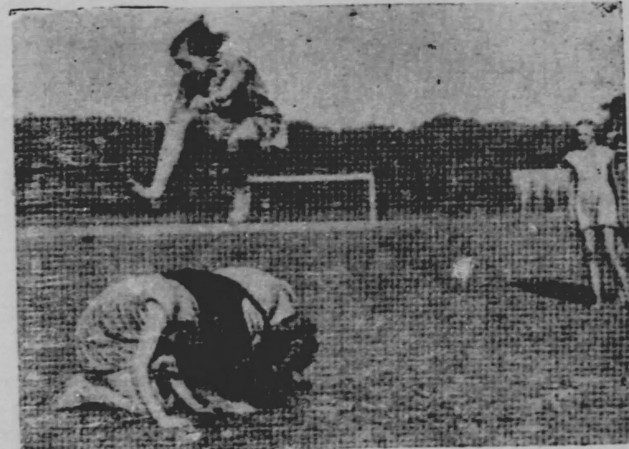
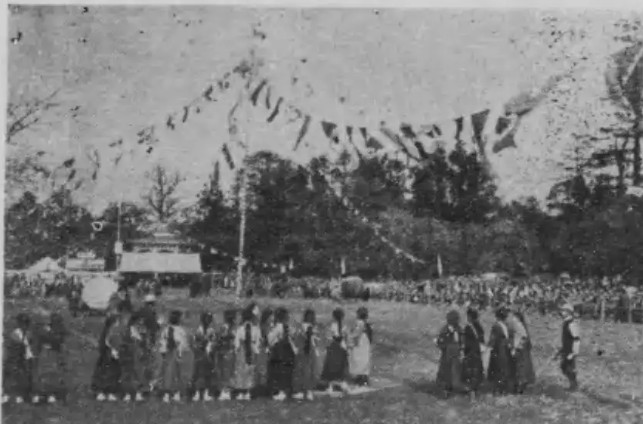
Elementary School Physical Education Research Society, Selected Sports Day Activities Based on the New Curriculum Guidelines (Sanyūsha, 1936).p.13
Source: National Diet Library
Why Is Sports Day Held in Autumn?
Today, many people associate Japanese sports day with autumn.
But the earliest school sports days were not necessarily held in autumn. The timing varied from one school and region to another.
One important reason for the eventual association with autumn was the agricultural calendar.
In rural communities during the Meiji era, children were an important part of the agricultural workforce. Planting and other agricultural work kept families busy during the farming season.
Once the harvest was over and agricultural work became less demanding, people had more time to take part in school and community events.
This may have helped autumn become an increasingly popular season for sports days.
In other words, the autumn sports day was not simply about choosing a pleasant season for exercise.
It was also a time when people who had been busy with agricultural work could finally gather together.
And as sports days became community events, this connection with the agricultural calendar may have made autumn an especially suitable time for them.
From Sports Day to a Harvest Festival
There is an especially interesting example at Tokyo University of Agriculture.
The university’s present-day Harvest Festival can trace part of its history back to athletic events held in the Meiji era.
In 1905, the school’s predecessor, Tokyo Higher Agricultural School, held an excursion at Futakotamagawa. Athletic competitions were included as entertainment during the event.
The following year, in 1906, the school combined its excursion with a sports day.
Then, in November 1907, it held its first full-scale sports day.
The event was about more than athletic competition. There were processions, performances, and even a farm-improvement dance, reflecting the school’s agricultural character.
Thousands of spectators reportedly gathered to watch.
This was beginning to look less like a simple school athletic competition and more like a festival.
The event changed over the years, eventually developing into what is now Tokyo University of Agriculture’s Harvest Festival.
Sports day and harvest festival may sound like two completely different things today.
But in the context of early twentieth-century Japan, both involved people gathering together, watching competitions and performances, and celebrating as a community.
The connection between sports and the harvest is particularly interesting.
Perhaps this is one reason my childhood memory of a community sports day feels less like a sporting event and more like a local festival.
From School Event to Community Celebration
By the Shōwa era, sports days had become an established part of school life and, in many places, had also taken on a strong community character.
At local sports days, children weren’t the only participants. Adults competed too.
Some people took their neighborhood competitions extremely seriously.
Others were happy to cheer from the sidelines, eating and drinking with friends and neighbors.
There was something about these events that went beyond physical education.
They brought the community together.
And at the center of the day was often the bento.
Families and neighbors would spread out their lunch boxes and eat together between events.
There were runners.
There were spectators.
There were people cheering.
And, of course, there were people who seemed to have come primarily for the food and drink.
Everyone gathered in the same place and spent the day together.
That is what made sports day more than just a sporting event.
The Tokyo Olympics and “Health and Sports Day”
Another event helped strengthen the association between autumn and sports in Japan: the 1964 Tokyo Olympics.
The opening ceremony of the Tokyo Olympics was held on October 10, 1964.
October 10 later became Taiiku no Hi, or “Health and Sports Day,” a national holiday in Japan. The holiday was eventually renamed Sports Day.
The Tokyo Olympics were certainly not the reason sports days became associated with autumn in the first place.
That tradition had much deeper roots.
But having a national holiday devoted to sports in October helped reinforce the image of autumn as a season for physical activity and sporting events.
Sports Day Was Never Just About Running
Japan’s sports day began in the Meiji era as part of the country’s introduction of modern physical education.
At first, these events were school competitions.
But as sports days spread through schools and communities, they gradually took on a different character.
People gathered.
They competed.
They watched.
They cheered.
And they ate together.
For rural communities, the autumn timing also meant that the busiest agricultural work of the year was coming to an end.
At Tokyo University of Agriculture, an athletic event held in the Meiji era eventually developed into today’s Harvest Festival.
Perhaps sports day and the festival were never as far apart as they might seem.
And when I think back to the community sports days of my childhood, I don’t remember the rankings or the scores most clearly.
I remember the younger men running with surprising determination.
I remember the older men holding dried squid and canned beer.
And I remember my family sitting together around a large bento lunch.
Sports day was never just a day for running.
References
- National Archives of Japan Digital Archive, “Kyōtō Yūgi-hyō” (Competition Games Program) — The program for the “Competition Games” held at the Naval Academy in 1874 (Meiji 7), generally regarded as Japan’s first school sports day. National Archives of Japan Digital Archive
- Yoshimi, Shunya (1994), “The Ideology of Sports Days: Festival Culture in Meiji Japan,” Shisō, No. 845, Iwanami Shoten, pp. 137–162.
- Tokyo University of Agriculture, “History of the Harvest Festival” — The history of the festival, tracing its origins from recreational activities at a field trip in 1905, through the field trip and sports day held in 1906, to the first full-scale sports day in 1907 and its eventual development into today’s Harvest Festival.
- Tokyo University of Agriculture, “History of Tokyo University of Agriculture” — The history of how the 1907 sports day was carried on and eventually became the university’s Harvest Festival.