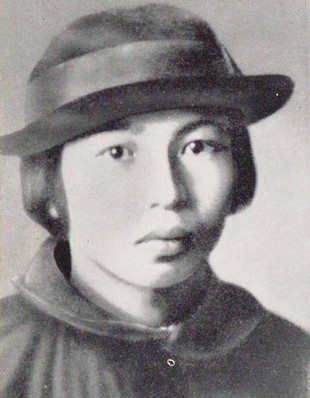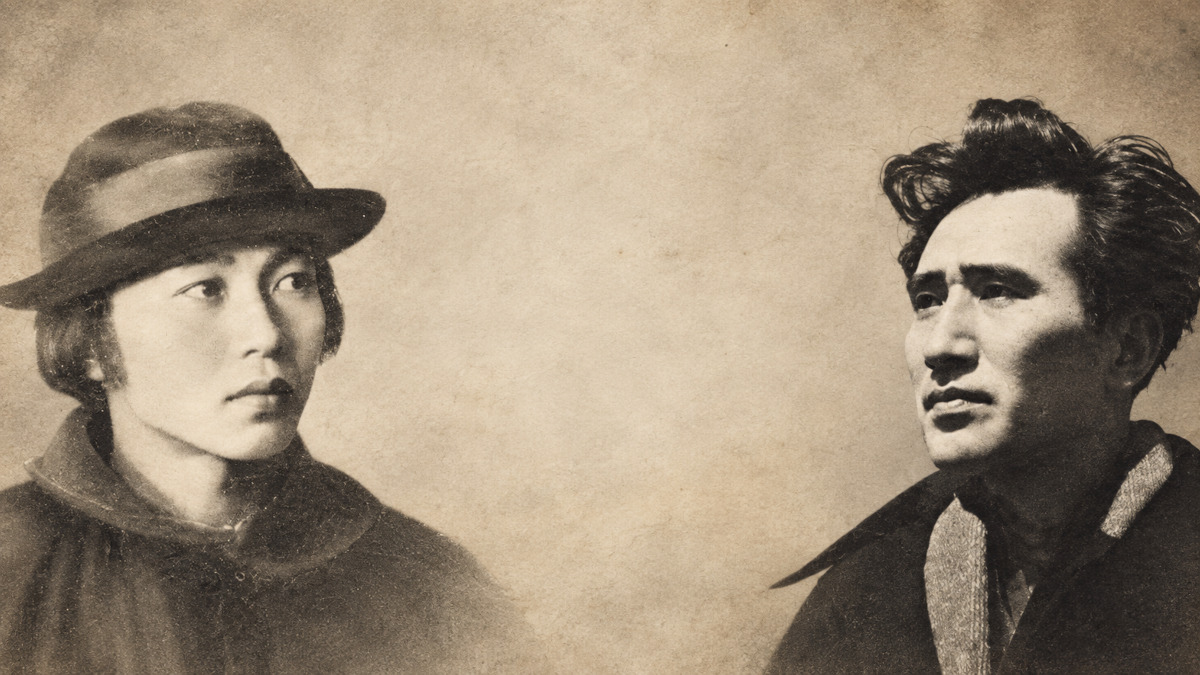
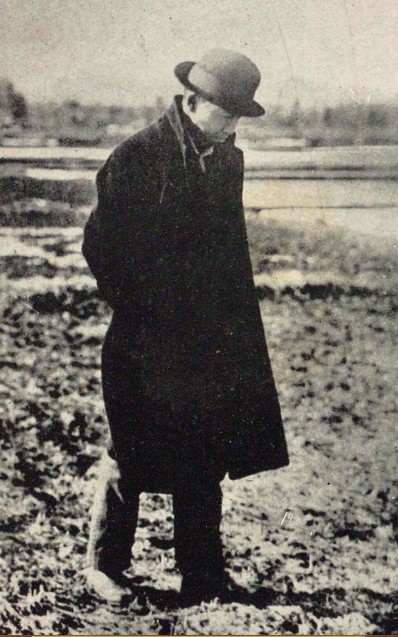
When you hear the name “Miyazawa Kenji,” what works come to mind?
Night on the Galactic Railroad, The Restaurant of Many Orders, or Matasaburo of the Wind?
Many people may remember his stories from school textbooks.
But simply calling Miyazawa Kenji a “children’s story writer” does not quite capture who he was.
He wrote poetry, studied agriculture, took a keen interest in plants, minerals, astronomy, and science, loved music, and worked as a teacher. He was also deeply concerned with improving the lives of farmers in the rural communities of Iwate, where he lived.
The stars, wind, plants, minerals, and light that appear in Kenji’s works are not merely scenery surrounding his stories.
Scientific knowledge, his way of looking at nature, religious ideas, poetry, and children’s stories were all interconnected in his mind as parts of a single world.
One of the contemporary poets who took notice of this distinctive poetic world was Nakahara Chūya.
Who Was Miyazawa Kenji?
Miyazawa Kenji was born in 1896 in Hanamaki, Iwate Prefecture.
He studied agriculture and soil science at Morioka Higher School of Agriculture and Forestry and later worked as a teacher.
Kenji’s interests extended far beyond literature.
Agriculture, plants, minerals, astronomy, geology, music, and religion—
he was fascinated by many different fields and did not see them as separate areas of knowledge. Instead, he brought them together within his own view of the world.
He was also deeply interested in rural life and used the knowledge he had gained through his agricultural studies in an effort to improve the lives of farmers.
One of his activities was the establishment of the Rasu Chijin Association in Hanamaki.
Writing literature was not the only “work” Kenji pursued.
Rather, literature, agriculture, science, and music all seem to have been connected to a larger question for him:
How should we live?
Miyazawa Kenji Was More Than a “Children’s Story Writer”
Nature is one of the most striking elements of Kenji’s writing.
The wind blows.
Stars shine.
Plants sway.
Minerals sparkle.
His descriptions contain not only beautiful images of nature, but also words and expressions that suggest careful scientific observation.
Kenji, for example, had a strong interest in astronomy while also portraying stars and the universe in fantastical ways.
He was also knowledgeable about minerals and geology, and specialized terminology sometimes appears unexpectedly in his works.
This can make you wonder, while reading one of Kenji’s stories:
“Is this really a story written for children?”
His writing can feel fantastical, yet somehow resemble a science textbook.
It is beautiful, yet it also has the eye of a careful observer.
Perhaps this unusual combination is one of the great attractions of Miyazawa Kenji’s work.
The Poet Miyazawa Kenji — Spring and Asura
The poetry collection published by Miyazawa Kenji during his lifetime was Spring and Asura .
Published in 1924, the collection contains distinctive works that feel less like conventional poetry and more like an attempt to transform the world before his eyes into words all at once.
Spring fields.
Wind.
Light.
Clouds.
Stars.
And his own sensations.
Kenji does not simply portray these things as beautifully arranged scenery.
The “self” observing nature is also drawn into that very nature.
As a result, his poetry can create a feeling in which it is difficult to tell where reality ends and fantasy begins.
Another fascinating feature of his poetry is the way scientific language and fantastical imagery can appear side by side.
And it was this side of Miyazawa Kenji—the poet—that Nakahara Chūya took notice of.
A World of Light and Stars in Kenji’s Works
When reading Miyazawa Kenji, it is hard not to notice the presence of light.
Starlight, the moon, the night sky, the Milky Way, and the glow of minerals.
Light suddenly appearing in darkness feels almost symbolic of Kenji’s world.
The night sky in Night on the Galactic Railroad is one of the most familiar examples.
Yet in Kenji’s world, light is more than simply beautiful scenery.
The stars and the galaxy can be viewed scientifically, while at the same time they can be understood as something carrying a sense of fantasy and wonder.
He observed the real world closely, while imagining a world that seemed to lie beyond it.
This combination helped create Kenji’s unique literary world.
This way of seeing and appreciating light was not unique to Kenji.
During the Meiji and Taishō periods, forms of visual culture such as magic lantern shows were also becoming popular, using light and shadow to create images of the world.
When considering Kenji’s literary world, this contemporary culture of “seeing” and enjoying light provides an interesting point of connection.
Representative Works by Miyazawa Kenji
Kenji left behind many works that continue to be read today.
Night on the Galactic Railroad
Giovanni and Campanella travel through the night sky aboard the Galactic Railroad.
Images of the stars, the galaxy, and the scientific universe are intertwined with questions about friendship, death, and what it means to live.
The Restaurant of Many Orders
Two gentlemen in the mountains discover a strange restaurant.
The story is humorous, yet it also invites us to think about the relationship between human beings and nature.
Matasaburo of the Wind
A boy appears like the wind and disappears like the wind.
Something mysterious enters the everyday lives of a group of children.
Gauche the Cellist
A story about a musician who gradually changes through his encounters with music.
Knowing that Kenji himself loved music makes the background of this story even more intriguing.
Alongside his children’s stories, we should not forget Kenji the poet.
In particular, Haru to Shura helps free our image of Miyazawa Kenji from the narrow category of a “children’s story writer.”
Why Is Miyazawa Kenji Still Read Today?
There is something about Miyazawa Kenji’s works that makes them feel surprisingly timeless.
Of course, they were written during the Taishō period and the early Shōwa period.
Yet the feeling of looking up at the stars, listening to the wind, dreaming strange dreams, or longing for an unknown world is something we can still understand today.
More than anything, Kenji’s works leave us with a question:
“How should we see this world?”
How should we look at nature?
How should we understand science?
How should human beings relate to one another?
What does it mean to be happy?
Rather than explaining these questions one by one, Kenji places them within stars, wind, music, and stories.
Perhaps that is why his works reveal something different each time we read them.
Miyazawa Kenji was not simply “a man who wrote strange and beautiful children’s stories.”
Poetry, children’s stories, agriculture, science, and music—
he continued to look at all these seemingly separate things as parts of a single world.
Learning about Kenji is not only a way of discovering his works. It can also help us understand how people in Japan, during the transition from the Meiji and Taishō periods into the Shōwa period, looked at and understood the world around them.
References
- National Diet Library, Portraits of Modern Japanese Historical Figures: Miyazawa Kenji
- Morioka City, Miyazawa Kenji: The 108th Episode