From Tsukimi Soba to Tsukimi Burgers
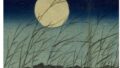
Traditional moon-viewing in Japan was not only about the moon. People also displayed pampas grass and offered seasonal harvests.
So when did foods called “tsukimi” first appear?
Today, when people hear the word tsukimi, they may think not only of tsukimi dango (moon-viewing rice dumplings), but also tsukimi soba, tsukimi udon, and even tsukimi burgers.These foods fall into two different categories: foods eaten as part of the moon-viewing tradition, such as tsukimi dango, and foods named “tsukimi” because they resemble the moon, such as tsukimi soba and tsukimi burgers.
Tsukimi, once an occasion for looking at the moon, has gradually become a name used for food as well.
Tsukimi Soba and Tsukimi Udon
Two well-known examples of dishes with “tsukimi” in their names are tsukimi soba and tsukimi udon.
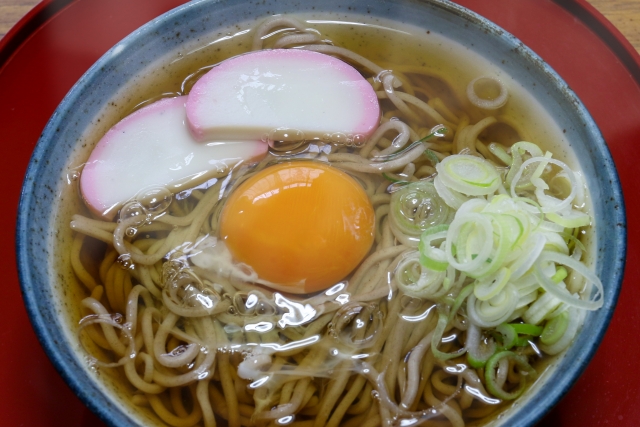
In both dishes, an egg is used to represent the moon.
When an egg is placed on top of soba or udon, the bright yellow yolk floats in the white of the egg.
Its appearance resembles the moon in the night sky, which is why the dish came to be called tsukimi.
So, when did people start eating tsukimi soba?
Tsukimi soba is said to have appeared after the Meiji period began.
Making tsukimi soba may seem simple: all you need to do is put a chicken egg on top of the noodles.
But during the Edo period, eggs were not an everyday ingredient that everyone could easily use as they are today. Eggs had considerable value, and there were also concerns about food hygiene. A dish made by simply placing a raw egg on top of soba was therefore not something that could easily become an everyday meal.
In other words, the idea of using an egg to represent the moon is simple. But for a dish like tsukimi soba to become popular, changes in egg consumption, distribution, and food hygiene also played a role.
You do not actually have to look at the moon here.
You find the “moon” in your food.
The word tsukimi gradually moved beyond its original association with moon-viewing and began to describe the shape or appearance of food as well.
“Tsukimi” Became a Name for Food
This kind of naming is not particularly unusual in Japanese food culture.
Foods are sometimes named after things in nature because their shapes or colors resemble them.
Using an egg yolk to represent the moon is one example.
This is different from tsukimi dango, which is associated with the moon-viewing tradition itself. Tsukimi soba and tsukimi udon are named “tsukimi” because the egg on top represents the moon.
The same word, tsukimi, is used in both cases, but our relationship with the moon has changed slightly.
And this idea eventually spread to even more modern foods.
And Then Came the Tsukimi Burger
You cannot talk about modern tsukimi without mentioning the tsukimi burger.
The Japanese branch of McDonald’s sells its “Tsukimi Burger” for a limited time each autumn. It is a hamburger made with an egg, given the name tsukimi, or “moon-viewing.”
Many people look forward to its arrival each year.
You do not need to look at the moon to eat a tsukimi burger.
And yet, when people hear “tsukimi burger,” many immediately think of autumn.
That is what makes it so interesting.
For people in the past, the moon, pampas grass, and seasonal harvests helped signal the arrival of autumn.
Today, seeing tsukimi burgers appear in restaurants can be one of the signs that autumn has arrived.
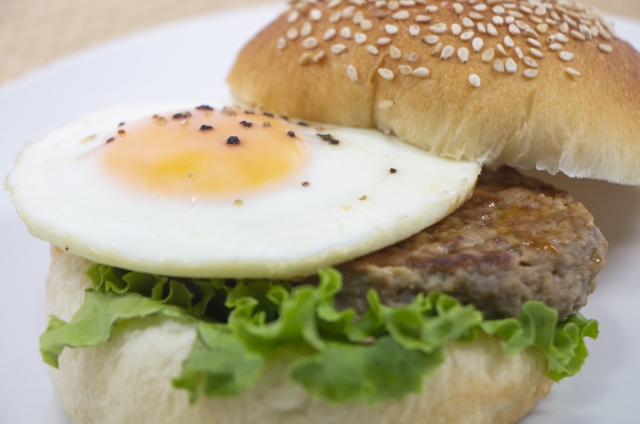
This is an image of a tsukimi burger and does not represent any specific product or brand.
You May Not Know When Tsukimi Season Is, But You Know When Tsukimi Burger Season Is
I used to teach haiku and seasonal words to junior high school students.
If I asked,
“When is tsukimi? What season is it?”
they might not be able to answer right away.
But if I asked,
“Then, when is tsukimi burger season?”
they would probably answer,
“Autumn!”
They might not know when the harvest moon is, but they know when the tsukimi burgers are released.
That is a rather interesting phenomenon when we think about how we experience the seasons today.
Of course, the tsukimi burger itself is not an official seasonal word, or kigo, in haiku.
But the feeling that the word tsukimi brings autumn to mind is still very much alive.
For people in the past, the full moon, pampas grass, and seasonal harvests were signs of autumn.
For us today, the arrival of tsukimi burgers can be one of the things that signals the season.
You may not know when tsukimi season is, but you know when tsukimi burger season is.
The word tsukimi has changed its form, but it still brings autumn with it.
Even Without Looking at the Moon, Tsukimi Remains
Seasonal traditions do not always survive in exactly the same form.
In the past, people gazed at the moon, displayed pampas grass, and offered the harvest of autumn.
Tsukimi dango belongs to the tradition of moon-viewing itself. Tsukimi soba and tsukimi udon are different: they use an egg to create the image of the moon on the table. The modern tsukimi burger takes this idea even further.
Today, it also lives on in the form of the tsukimi burger, which signals the arrival of autumn.
Looking at the moon and turning the moon into a food may seem completely different.
Yet both are connected by the word tsukimi and its association with the season.
We do not celebrate the harvest moon in exactly the same way people did in the past.
Even so, when autumn comes, we see the word tsukimi and feel the season.
Perhaps that is one way seasonal culture survives.
Even without looking at the moon, tsukimi remains.
And now, tsukimi burgers bring autumn with them.
When “tsukimi” season ends, winter arrives.
There is another autumn food that makes me curious.
Pumpkin.
Pumpkin appears not only in autumn but also at the winter solstice.
Why do people in Japan eat pumpkin at the winter solstice?
That is a story for winter.
Reference
Shigeru Niijima, Sobano Jiten [Encyclopedia of Soba], Kodansha, 2011.