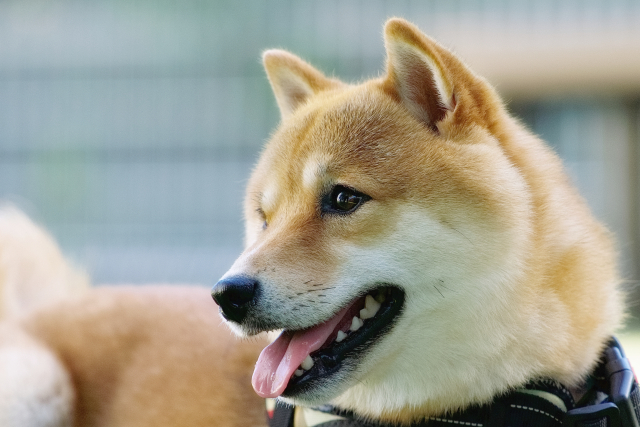
Today, when people think of Japanese dogs, many probably picture the Shiba Inu.
The Shiba Inu is also well known overseas thanks to the internet meme “Doge” and the cryptocurrency Dogecoin.
Small upright ears, a curled tail, and a slightly cautious expression. The Shiba Inu seems like a dog whose appearance has remained unchanged for centuries—a dog that fits perfectly into the Japanese landscape.
But if you think about it for a moment, something seems strange.
Was the Shiba Inu really always the way it looks today?
In fact, when we trace the history of the native Japanese dogs that eventually became the modern Shiba Inu, we find a surprising story.
In the past, Japan had many different types of dogs, with their own characteristics in different regions.
As Japan modernized, however, these dogs changed in appearance and became less common.
There were people who wanted to preserve these native Japanese dogs. In the course of their efforts, one particular dog was discovered.
His name was Ishigō, and he lived in Shimane Prefecture.
What Kinds of Dogs Lived in Japan in the Past?
The roots of Japanese dogs go back a long way. Dogs had lived alongside people in different parts of Japan for centuries.
However, there was never a single type of dog called a “Shiba Inu” that looked the same everywhere in Japan.
Dogs differed from region to region in size, coat color, facial features, and other characteristics.
Some were used as hunting dogs in mountainous areas, while others lived alongside people in farming villages and towns.
These locally rooted dogs later came to be known as jiken (地犬), or local dogs.
In other words, the “Japanese-looking” appearance we associate with the Shiba Inu today was not originally one fixed form.
There were many different local dogs.
Meiji Japan: Western Dogs Arrive
The environment surrounding these dogs changed dramatically during the Meiji period (1868–1912).
After Japan opened to the West, Western culture and new ways of life began entering the country.
Dogs were no exception.
Western breeds such as pointers and setters were brought to Japan, and one area in particular was strongly affected:
hunting.
As Western-style hunting became more common, Western dogs with strong hunting abilities attracted attention.
Adopting new ideas and using things considered more effective or advanced was very much part of the transformation taking place during the Meiji period.
But at the same time, dogs that had lived in different parts of Japan began to change as they interbred with Western dogs.
The fact that a dog had been living in Japan for generations did not necessarily mean that it would remain unchanged.
Another Change Affecting Dogs
Western dogs were not the only thing changing the environment surrounding Japanese dogs.
Rabies was another major issue.
As Japan modernized, rabies became a serious public health concern, and authorities introduced stricter controls over dogs.
Dogs were registered and restrained, and stray dogs were captured.
These measures were public health policies intended to protect human lives.
At the same time, the relationship between people and dogs was changing.
Dogs that had once been kept relatively freely within their communities were becoming animals that were increasingly managed and controlled within modern society.
The combination of crossbreeding with Western dogs and these broader social changes gradually caused many of Japan’s native dogs to disappear.
“We Have to Preserve These Dogs”
It was against this background that efforts to preserve Japanese dogs began to develop.
In 1928, the Nihon Ken Hozonkai (Nippon Ken Hozonkai, Japan Dog Preservation Society) was established.
Members of the organization traveled around Japan searching for dogs that still retained traditional characteristics.
Even when crossbreeding with Western dogs had already become common in cities, dogs with older characteristics could still be found in mountainous areas and rural communities.
People visited different regions, studied the dogs’ appearance and characteristics, took photographs, and recorded their pedigrees.
From our perspective today, this may seem like a slightly unusual task.
They did not assume that dogs that had existed for generations would simply continue to exist unchanged.
If you wanted to preserve them, you had to find them, record them, and deliberately preserve them.
Preserving Japanese dogs required this kind of modern, systematic effort.
One Dog Found in Shimane
Among the dogs discovered during these efforts was one that would become particularly important.
In 1930, a Sekishū dog was born in what is now Mitocho, Masuda City, Shimane Prefecture.
His name was Ishigō (石号).
Ishigō was kept by a hunter in a mountainous area and lived as a hunting dog.
A man from Shimane named Tsurukichi Nakamura noticed him.
Nakamura was involved in the activities of the Japan Dog Preservation Society and was investigating dogs that remained in different parts of Japan.
In 1936, Ishigō was sent to Tokyo and registered with the Japan Dog Preservation Society.
His bloodline was then passed on through subsequent breeding.
According to the Japan Dog Preservation Society, when the paternal lineage of registered Shiba Inu is traced back, it leads to Ishigō.
Ishigō did not “save” the Shiba Inu by himself.
But he was a dog discovered through efforts to preserve Japanese dogs, and he played an important role in the development of the bloodlines that eventually became the modern Shiba Inu.
The Shiba Inu Was Not Simply Preserved “As It Was”
In 1934, the Japan Dog Preservation Society established standards for Japanese dogs.
Japanese dogs were classified according to size, and the Shiba Inu came to be recognized as a small Japanese dog.
Then, on December 16, 1936, the Shiba Inu was designated as a Natural Monument of Japan.
The official designation documents identify small dogs raised in areas including Gifu, Nagano, and Toyama.
This tells us something important: the Shiba Inu did not originally have one identical appearance throughout Japan.
The Japan Dog Preservation Society also describes regional lines such as the San’in Shiba, Shinshu Shiba, and Mino Shiba.
Dogs that remained in different regions were studied, their characteristics were recorded, and efforts were made to preserve them.
The Shiba Inu we know today emerged from this accumulation of work.
How Did the Shiba Inu We Know Today Come to Be?
When we see a Shiba Inu, we often think of it as “a dog that has been in Japan since ancient times.”
It is certainly true that its roots are very old.
But the modern Shiba Inu is not simply the result of an ancient dog surviving unchanged.
Modernization after the Meiji period dramatically changed the environment surrounding Japanese dogs.
At the same time, there were people who believed that Japan’s native dogs might disappear if nothing was done.
They searched for dogs that remained in different parts of the country and tried to document and preserve them.
Ishigō, the dog who lived in the mountains of Shimane, was one of the dogs discovered through these efforts.
His bloodline eventually became connected to the Shiba Inu we know today.
So when we meet a Shiba Inu on the street and think,
“That dog hasn’t changed since the old days.”
perhaps that is not quite the right way to see it.
The Shiba Inu was not always the way it looks today.
There were many different dogs living alongside people in different parts of Japan. Their appearance changed as Japan modernized, and some of these native dogs came close to disappearing.
There were also people who tried to preserve them.
And among the dogs found during those efforts was one dog named Ishigō.
The Shiba Inu we see today is not simply the unchanged appearance of an “old Japanese dog” that survived naturally.
It is the result of a long history involving the people who lived with these dogs—and the people who worked to preserve them.
References
- Nihon Ken Hozonkai, Nihon Ken Hozonkai Sōritsu Gojūnenshi (50th Anniversary History of the Japan Dog Preservation Society), Nihon Ken Hozonkai, 1978.
- Hyōshirō Takaku, Masazō Sunaga, Gaifū Nakajima, and Kikujirō Tamura, Nihonken no Kenkyū (Research on Japanese Dogs), Seikōkan Shuppanbu, 1939.
- Masaki Shimura, Nihonken no Tanjō: Junketsu to Senbetsu no Nihon Kindai-shi (The Birth of the Japanese Dog: Pure Blood and Selection in Modern Japanese History), Bensei Publishing, 2017.
- Japan Dog Preservation Society, “History of Japanese Dogs” and “Shiba Inu.”