A Familiar Flower That Brightened Summer Life in Japan
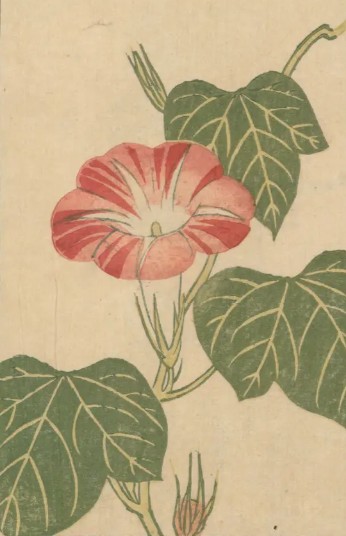
On summer mornings, morning glories bloom gracefully in gardens and along the eaves of houses, bringing a refreshing feeling to the hot season.
With their delicate flowers in shades of blue, purple, white, and pink, morning glories are one of the flowers that symbolize Japanese summer.
Today, they are well known as a plant that first-grade elementary school students grow as part of their studies. However, morning glories have been closely connected with Japanese daily life for centuries. During the Meiji and Taisho periods, they were not flowers enjoyed only by a select few, but a familiar presence loved by many people.
The Popularity of Morning Glories Since the Edo Period
The widespread popularity of morning glories began with the gardening culture of the Edo period.
During the Edo period (1603–1868), the cultivation and improvement of morning glory varieties became very popular. People enjoyed growing flowers with unusual colors and unique shapes. Morning glories were not simply garden plants; they became a source of enjoyment through cultivation and appreciation, attracting the interest of many people.
This popularity continued into the Meiji and Taisho periods, and morning glories became established as an easy-to-grow summer flower found in many homes.
Flowers That Brightened Summer Mornings
One of the charms of morning glories is that they bloom with fresh flowers every morning.
The flowers open in the early morning and close as the sunlight becomes stronger. For this reason, admiring morning glories during the cool morning hours became one of the special pleasures of summer.
Morning glories grown in gardens and pots must have brought a sense of freshness and coolness during the hottest season.
Waking up and checking the flowers.
Watering the plants.
Noticing a different flower blooming from the day before.
These small moments of joy were also part of summer life in the past.
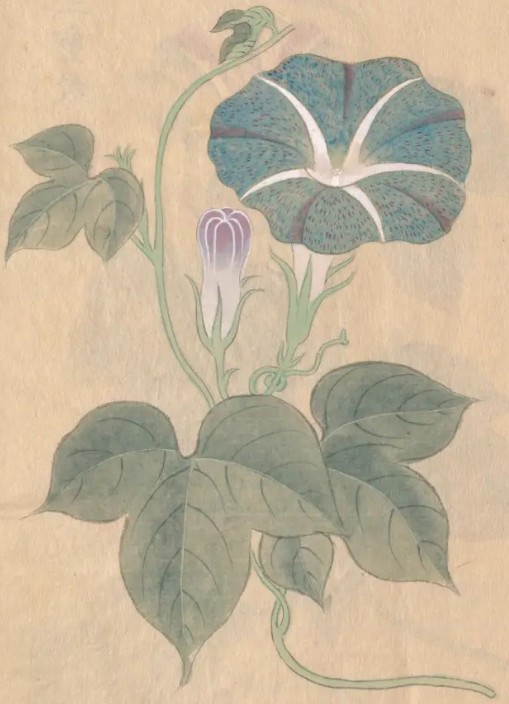
Kokon Yoran Ko , vol. 59, by Yashiro Hirokata. Manuscript copy. Source: National Diet Library Digital Collections
Morning Glories in Everyday Life
Morning glories were not only flowers to grow and admire.
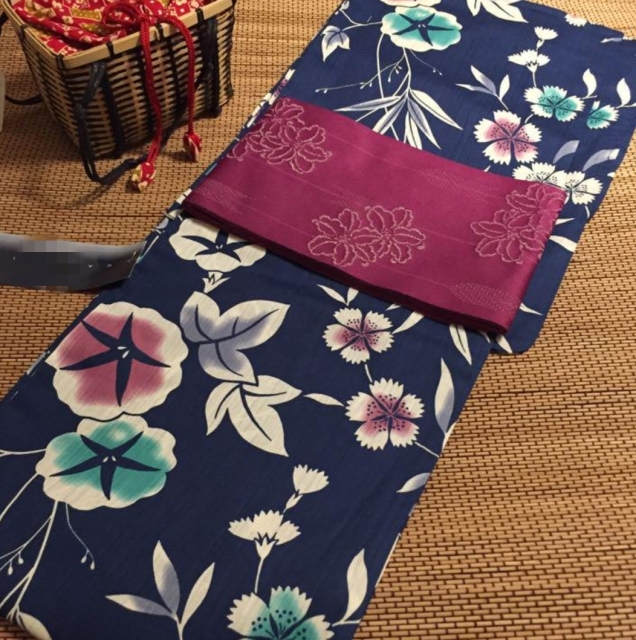
As a symbol of summer, they were often used as designs on items such as uchiwa fans, yukata robes, and tenugui hand towels.
The refreshing colors of the flowers and their graceful vines made morning glories a perfect pattern for the hot summer months.
By incorporating morning glory designs into summer activities, such as wearing yukata or using uchiwa fans, people enjoyed the feeling of the season through their surroundings as well.
Morning glories were flowers that bloomed in gardens, but they were also a familiar part of everyday life that helped people feel the arrival of summer.
Passing Down Seeds and Enjoying Flowers the Following Year
After morning glories finish blooming, their seeds can be collected.
Carefully storing these seeds and growing new flowers the following year was another reason why morning glories remained beloved for generations.
Blooming in the same season every year, morning glories also became a flower that announced the arrival of summer.
Morning Glories Still Growing Alongside Children Today
Even as times have changed, morning glories remain a familiar plant in Japan.
Many elementary schools today have first-grade students grow morning glories as part of their life studies classes. Through daily watering and observation, children learn about the growth of plants and the changes of nature.
Some schools also use the dried vines from morning glories to create wreaths during autumn and winter.
Children in the Meiji and Taisho periods likely enjoyed morning glories as summer flowers too. Today’s children continue to experience the changing seasons while caring for the same flowers.
Conclusion
Morning glories may not be the most showy flowers, but they have long been a flower that has accompanied everyday life in Japan.
A flower grown in gardens.
A flower enjoyed as a summer pattern.
A flower that gives children an opportunity to learn about growth and nature.
Although times have changed, morning glories continue to remind us of the arrival of the seasons.
The next time you see a morning glory blooming in summer, why not imagine the people of the Meiji and Taisho periods looking at the same morning flowers and enjoying the beauty of the season in a similar way?